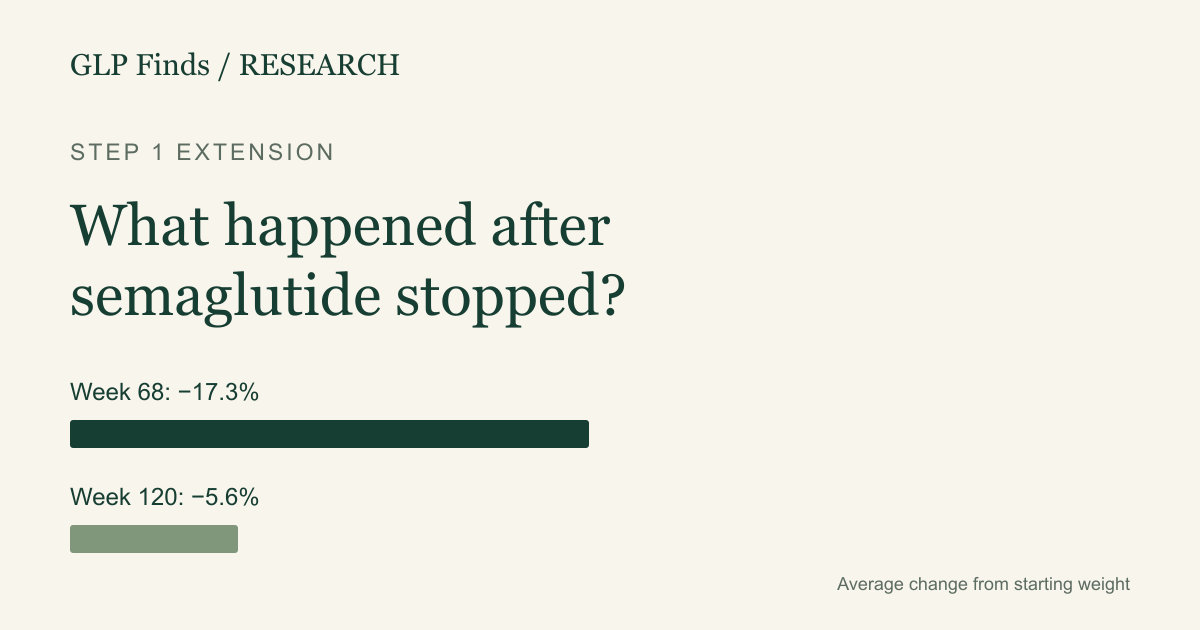
What happened a year after people stopped semaglutide?
A follow-up of 327 adults examines weight change after treatment and structured lifestyle support ended.
Explore the questions behind human weight-loss studies, what researchers found and what the results can—and cannot—tell us.
A follow-up of 327 adults examines weight change after treatment and structured lifestyle support ended.
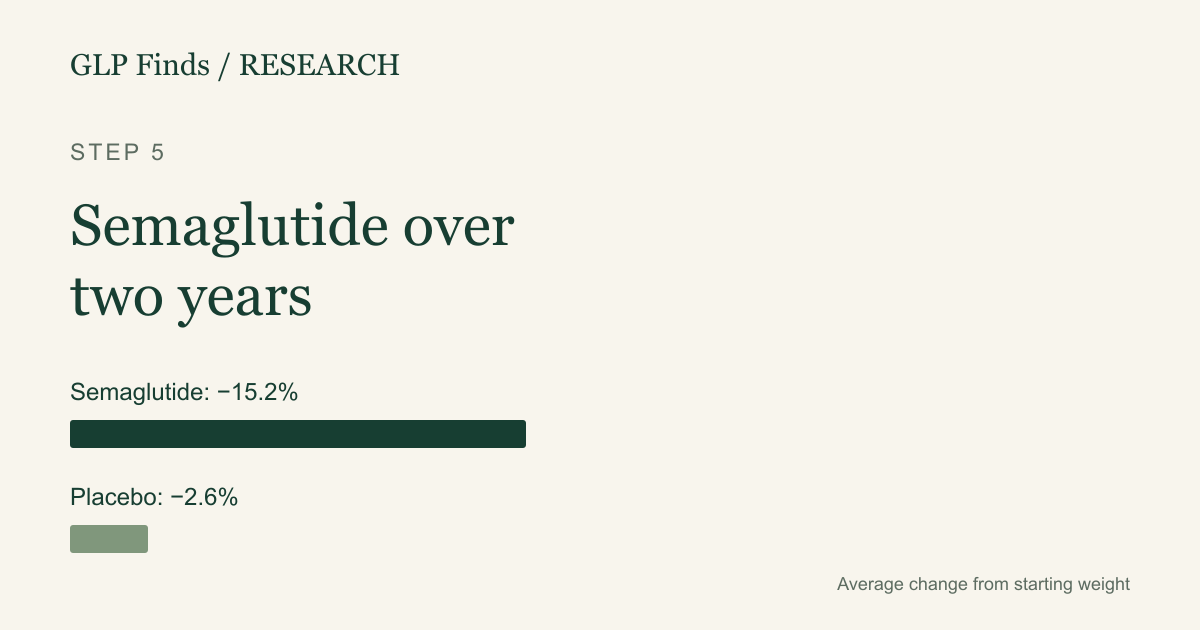
A two-year randomized trial compares semaglutide with placebo in 304 adults without diabetes.
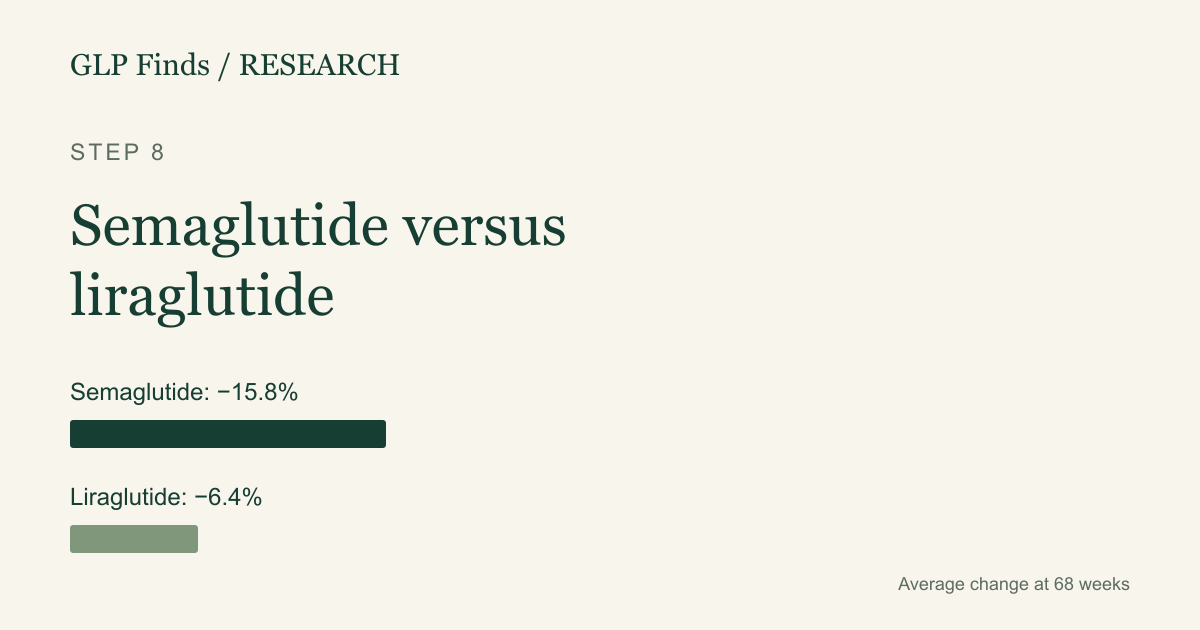
A direct comparison of the two regimens over 68 weeks.
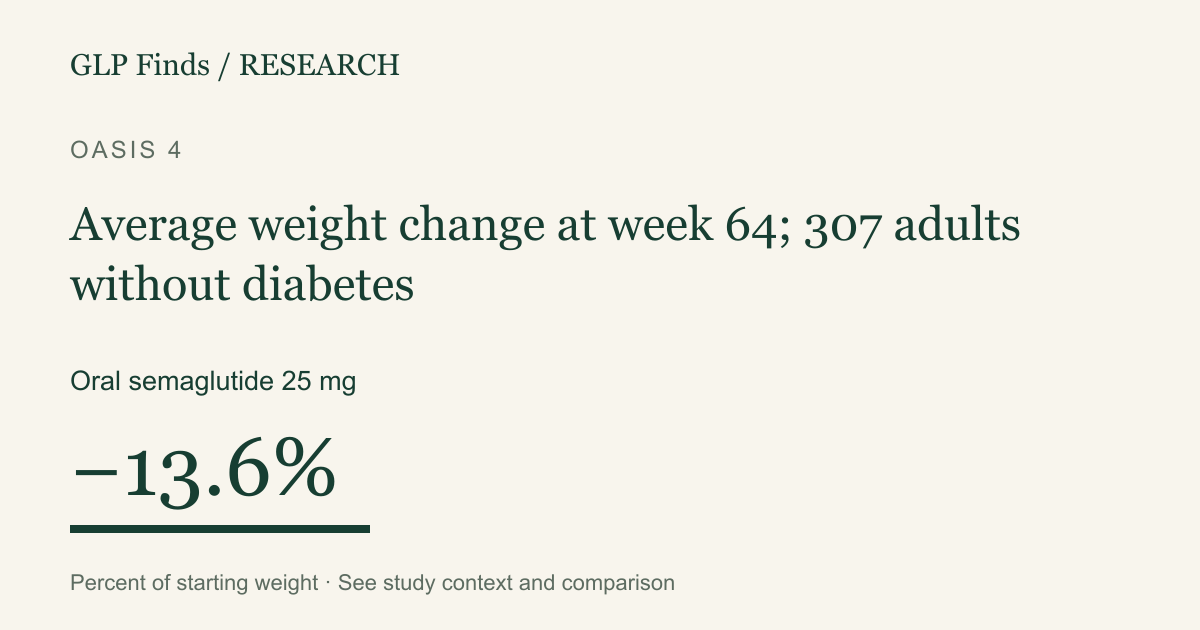
A trial compared daily oral semaglutide with placebo over 64 weeks.
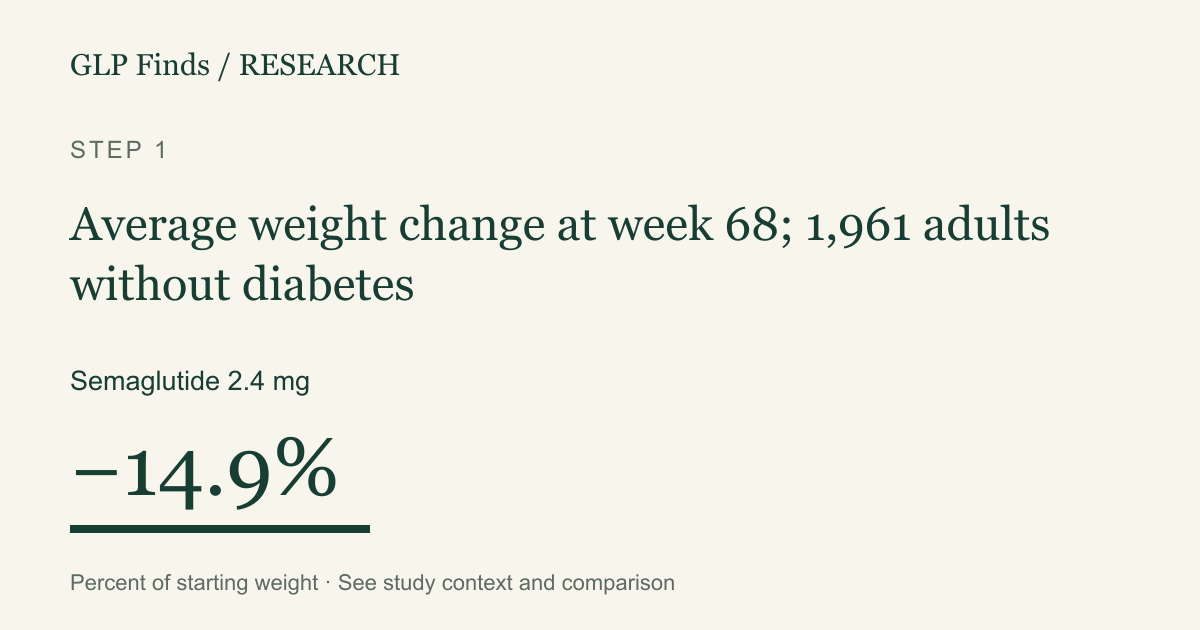
The 68-week STEP 1 trial compared semaglutide with placebo alongside lifestyle support.
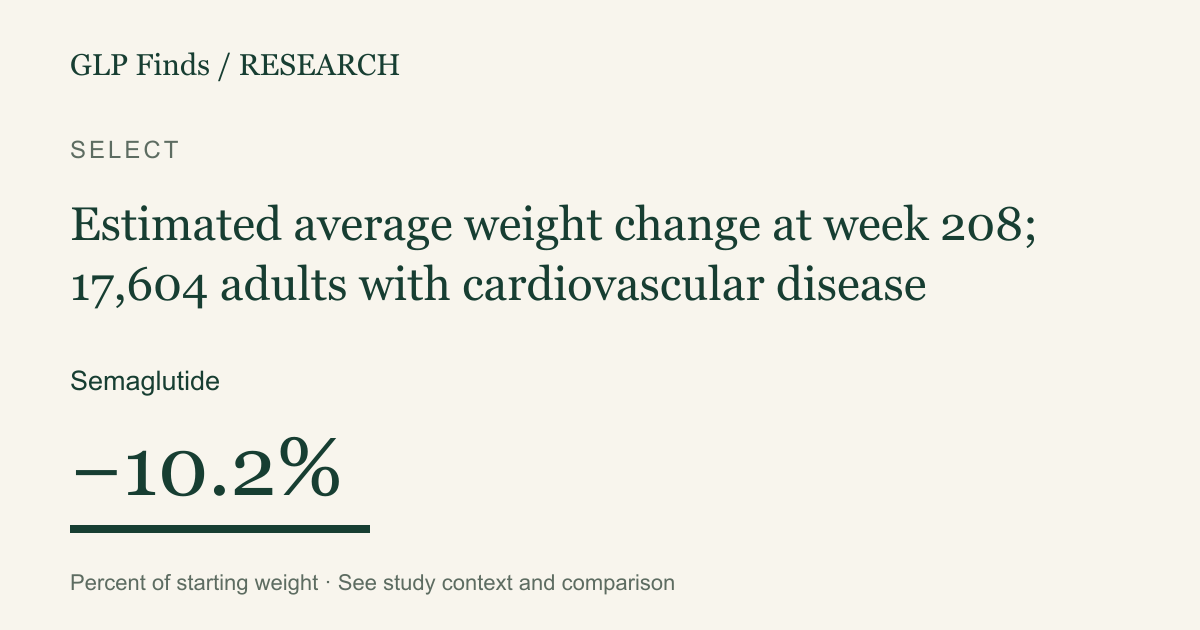
A cardiovascular trial followed weight outcomes for up to four years in adults without diabetes.
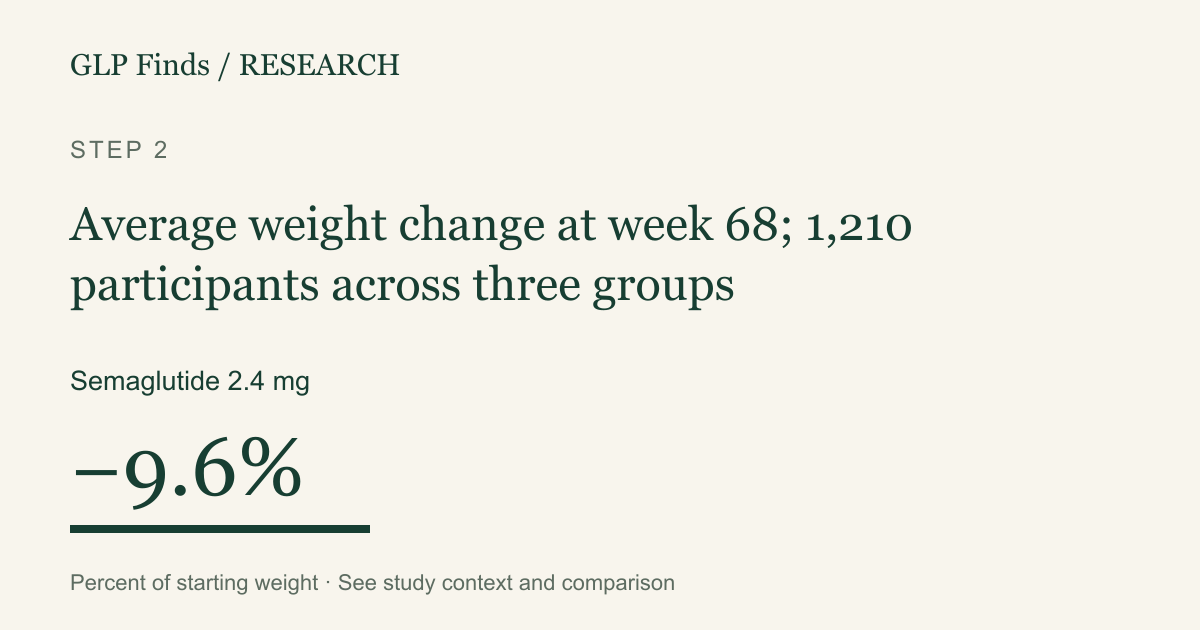
STEP 2 studied weight loss with semaglutide in adults with type 2 diabetes.
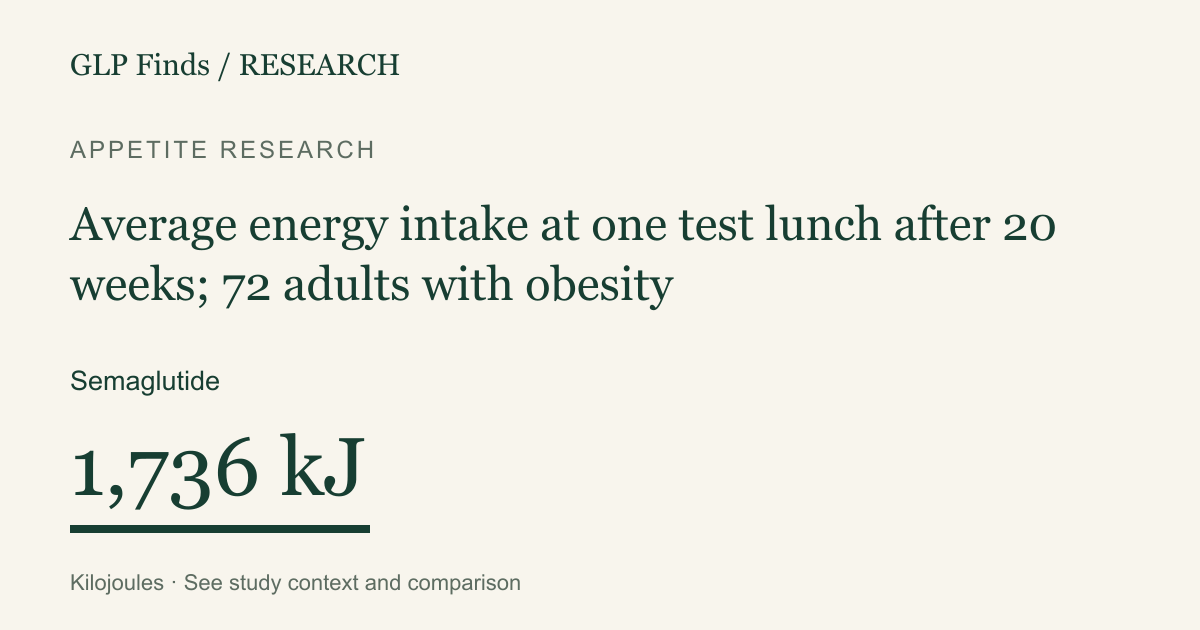
Two small randomized studies examined appetite and food intake with semaglutide.
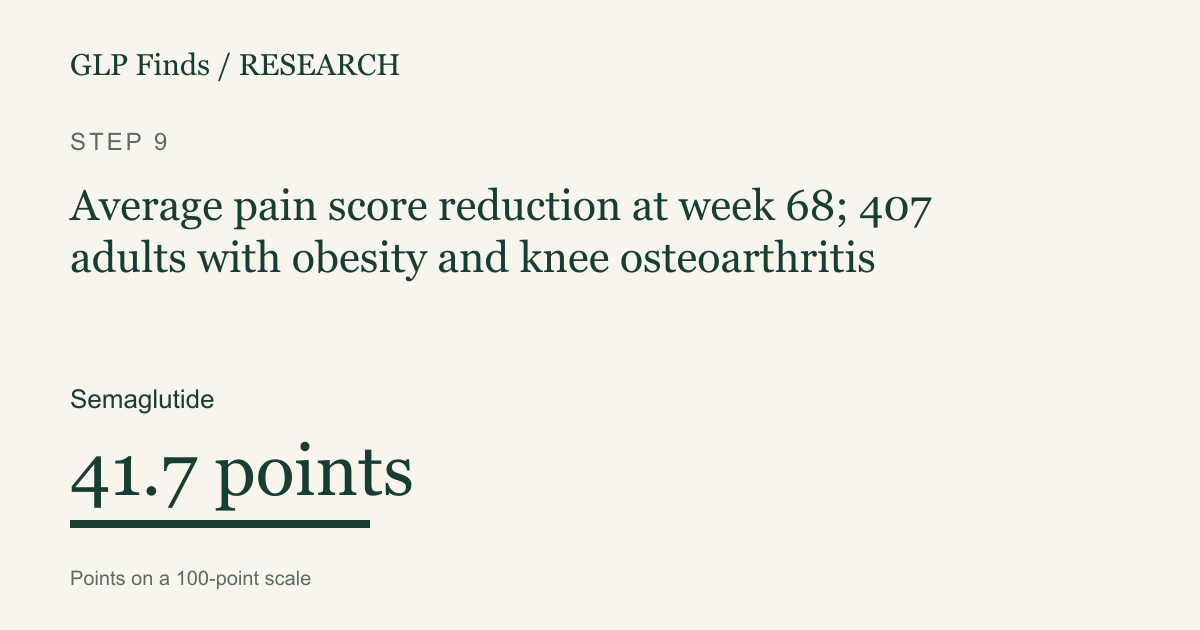
Average pain score reduction at week 68; 407 adults.
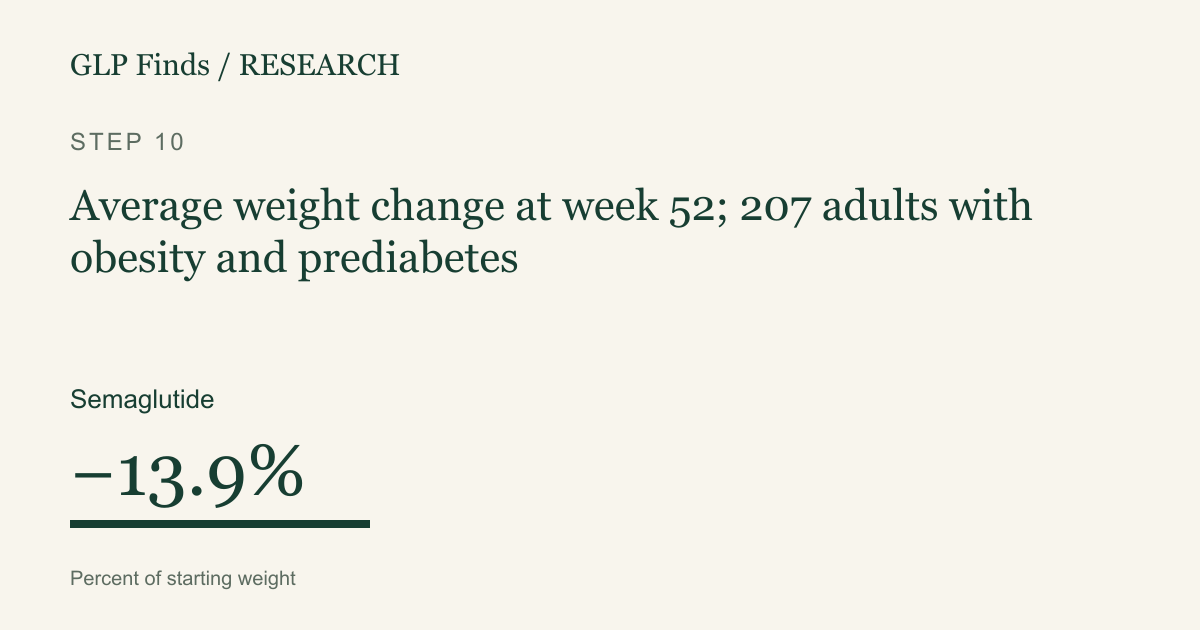
Average weight change at week 52; 207 adults with obesity and prediabetes.
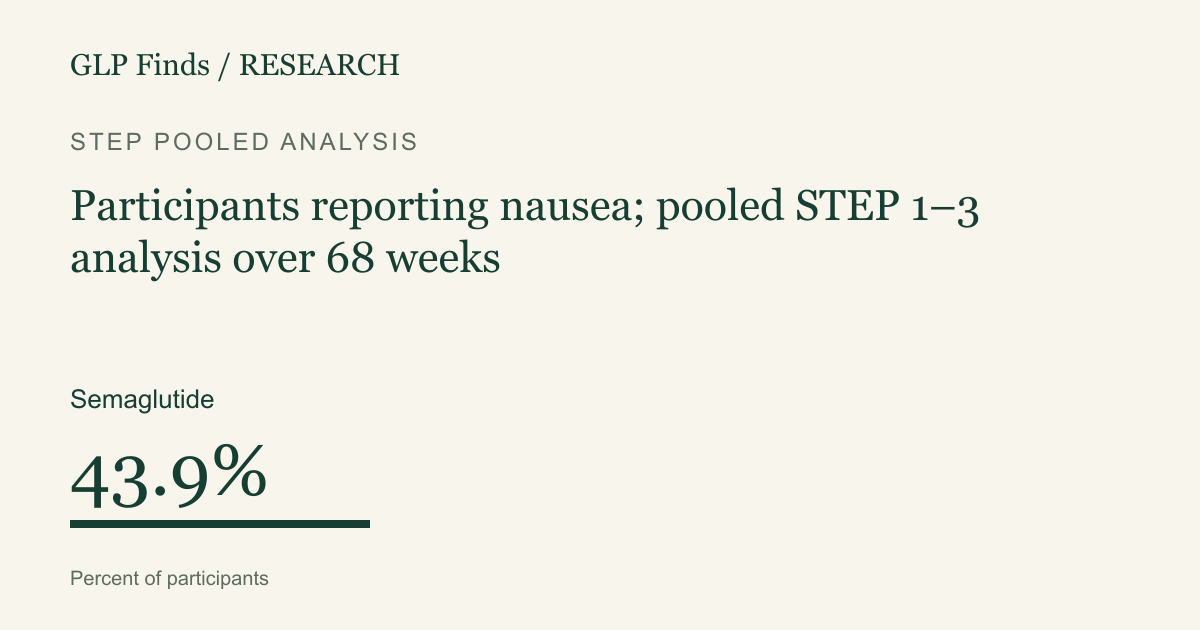
Participants reporting nausea; pooled STEP 1–3 analysis over 68 weeks.
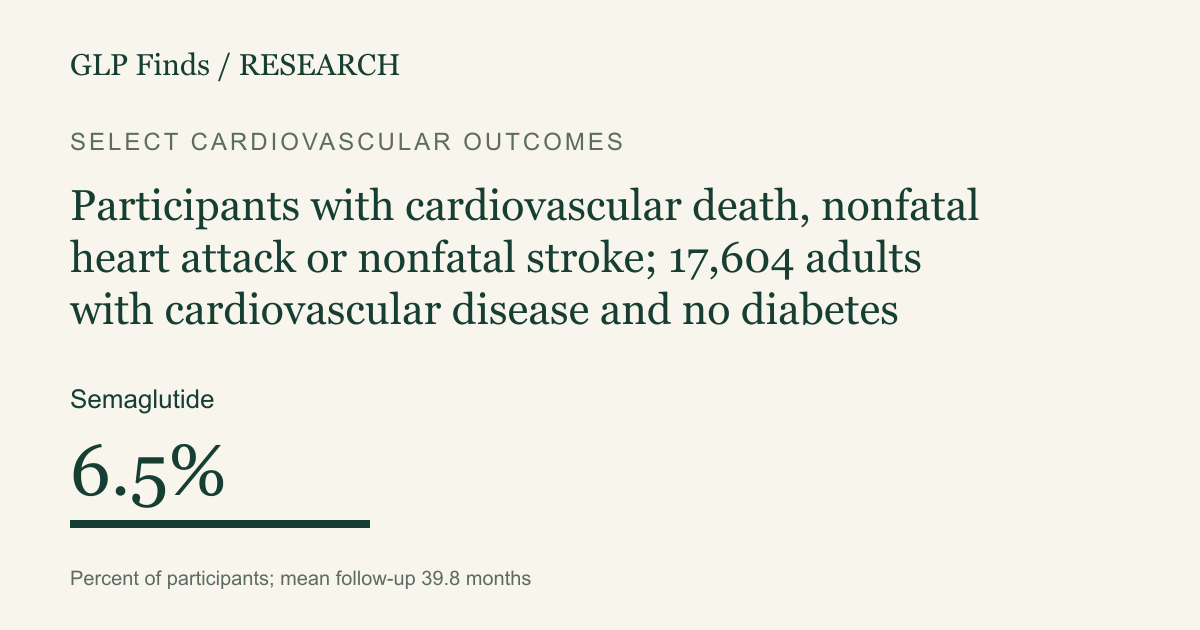
Participants with cardiovascular death, nonfatal heart attack or nonfatal stroke; 17,604 adults.
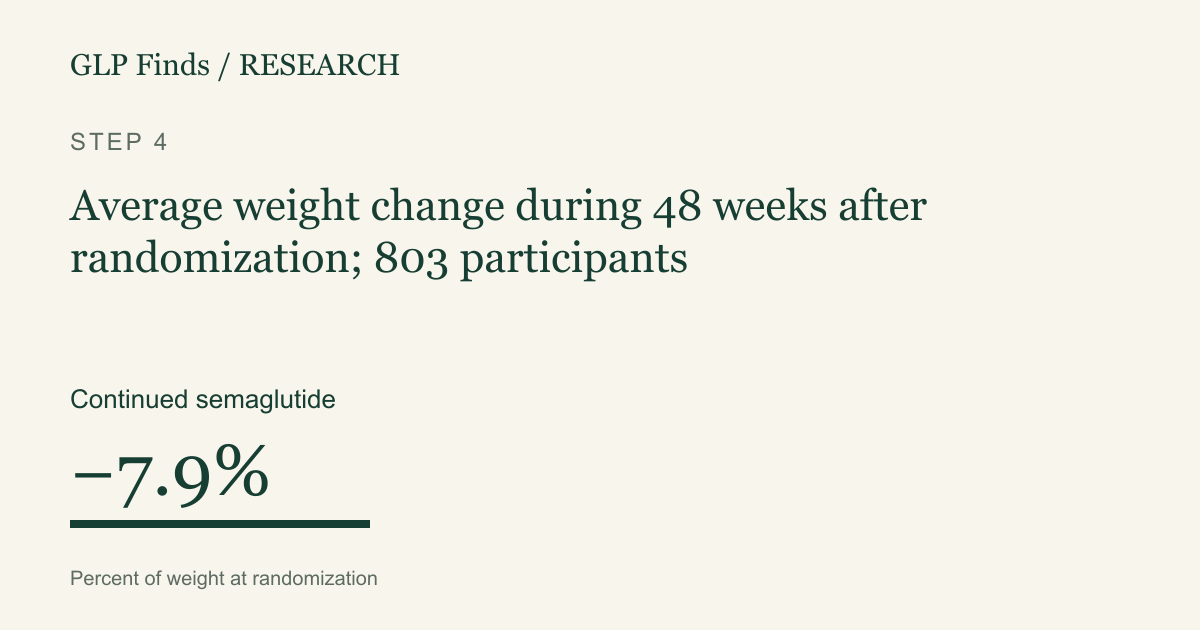
Average weight change during 48 weeks after randomization; 803 participants.
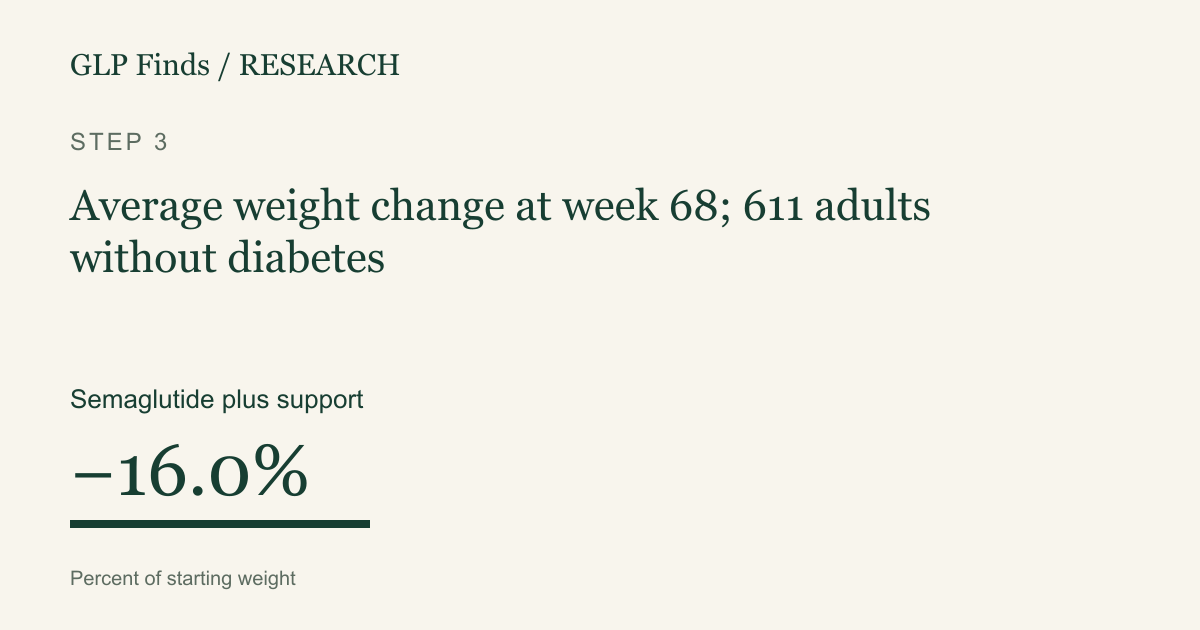
Average weight change at week 68; 611 adults without diabetes.
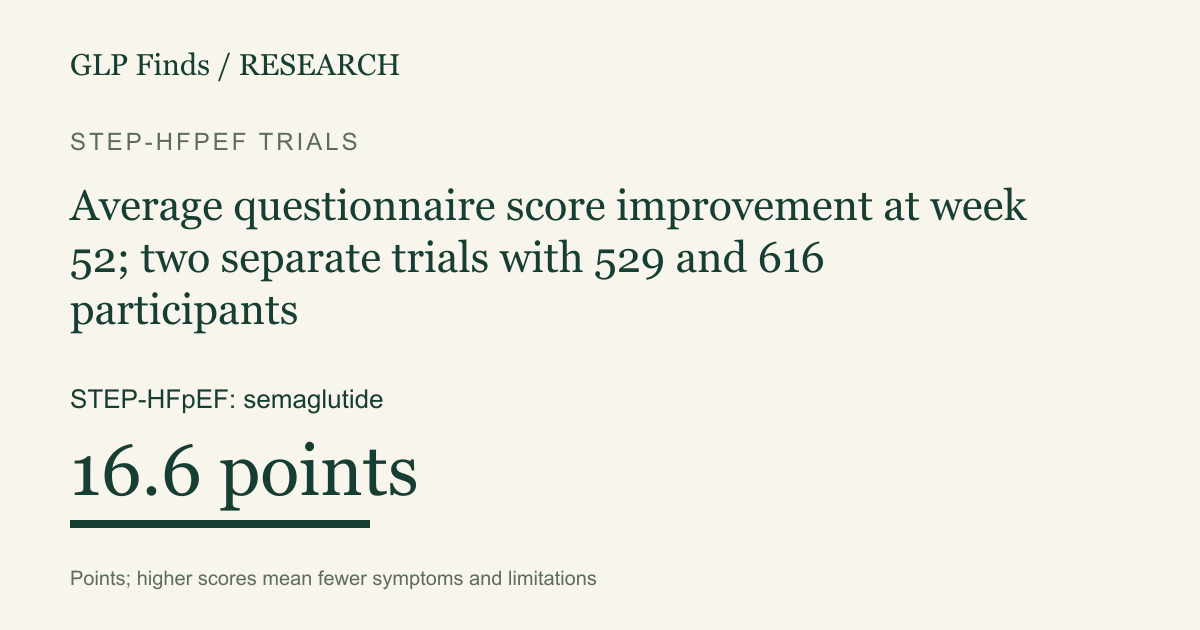
Average questionnaire score improvement at week 52; two separate trials.
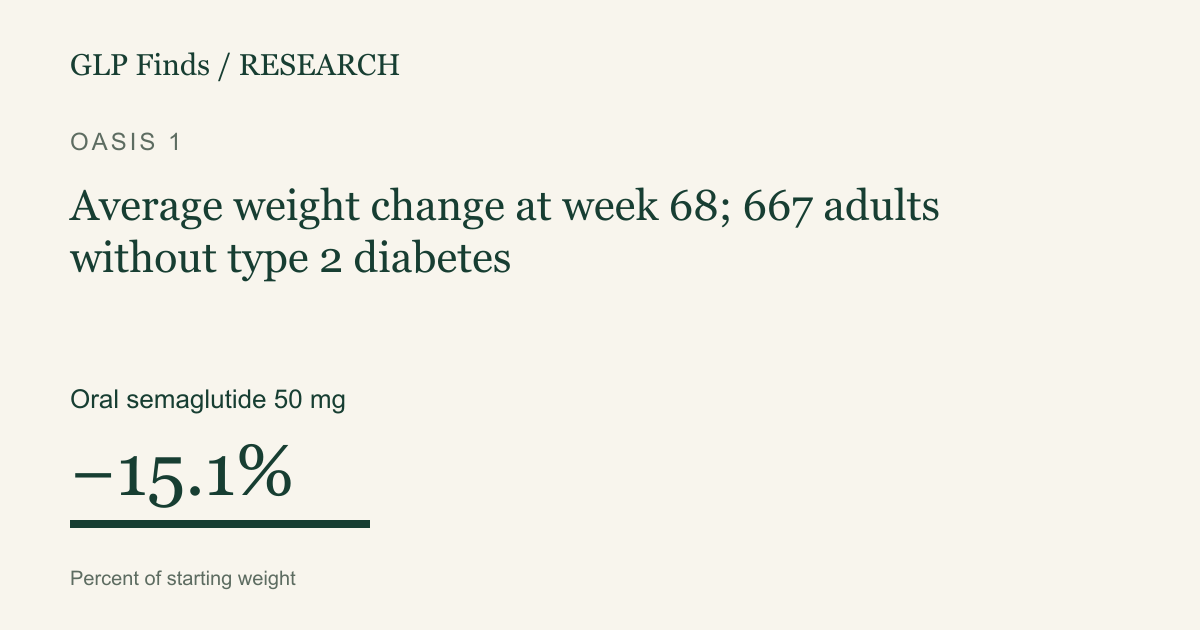
Average weight change at week 68; 667 adults without type 2 diabetes.
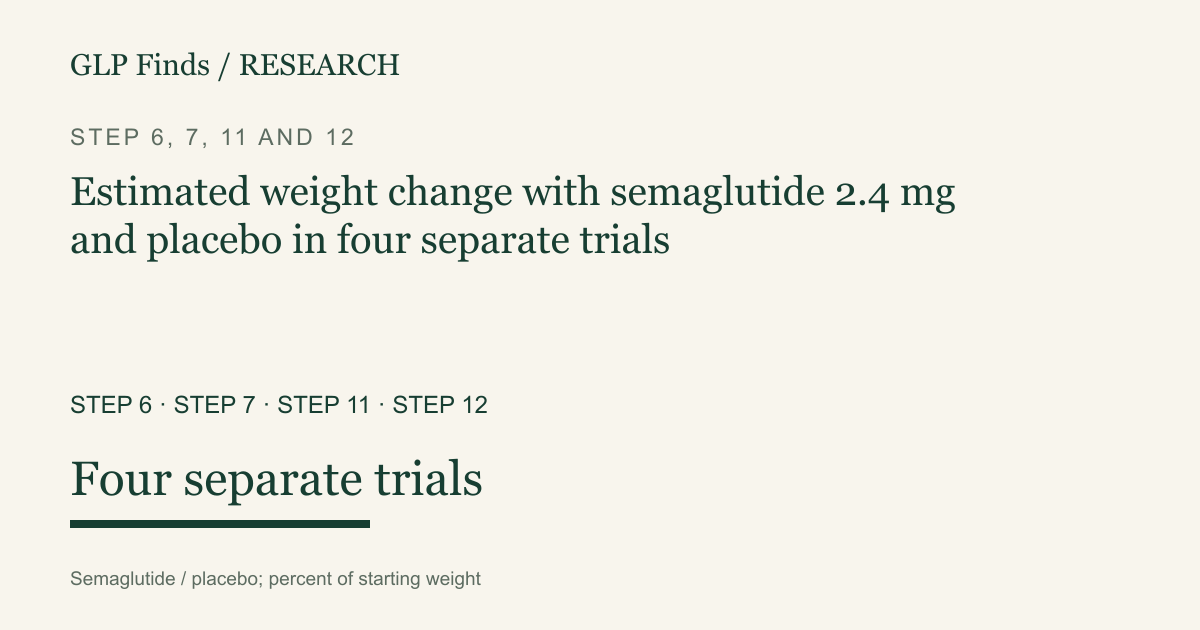
Four separate semaglutide studies included different Asian populations and trial settings.
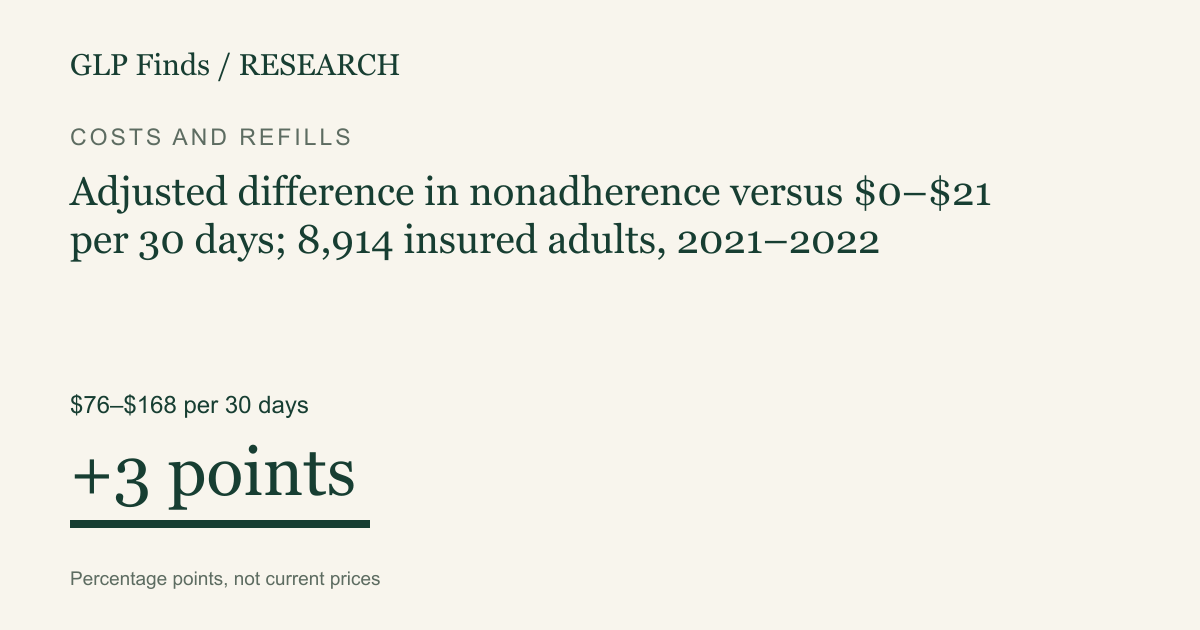
A historical insurance-record study examined out-of-pocket costs and semaglutide refills.
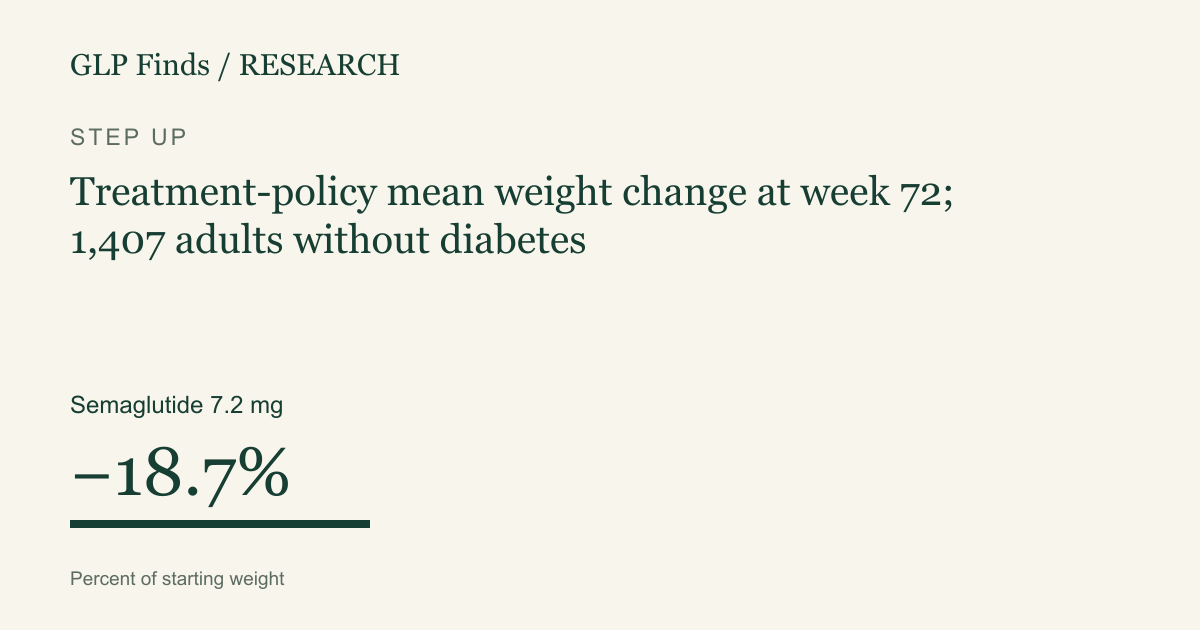
STEP UP compared two semaglutide trial doses and placebo in adults without diabetes.
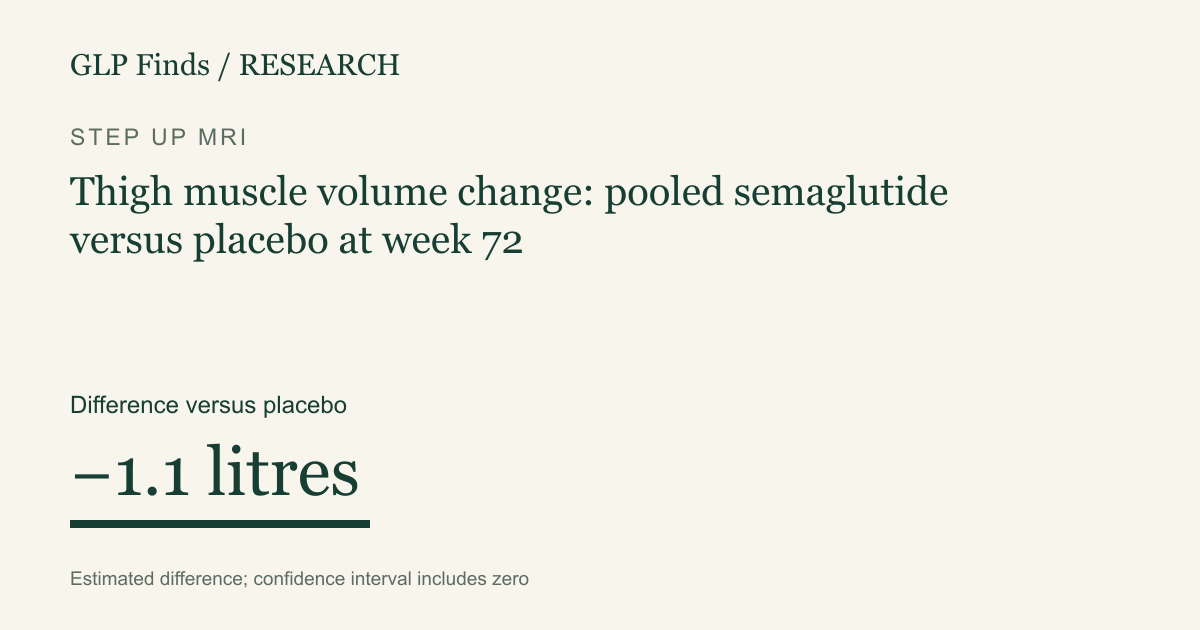
A small STEP UP analysis examined muscle imaging and function.
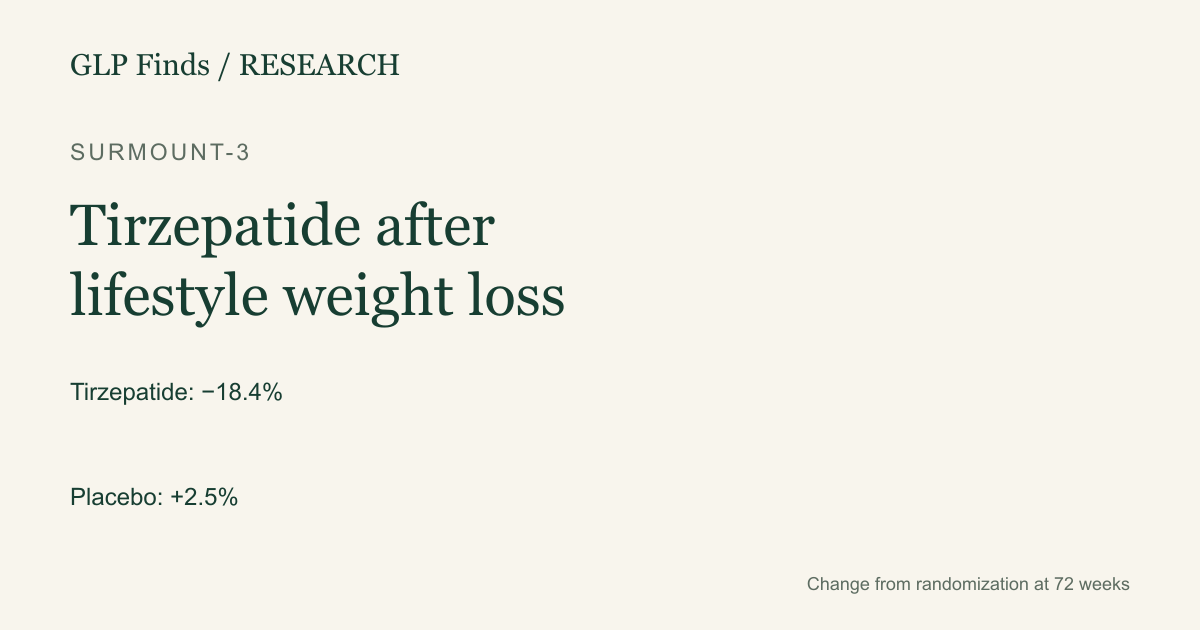
A trial studied treatment after participants first lost weight in an intensive lifestyle program.
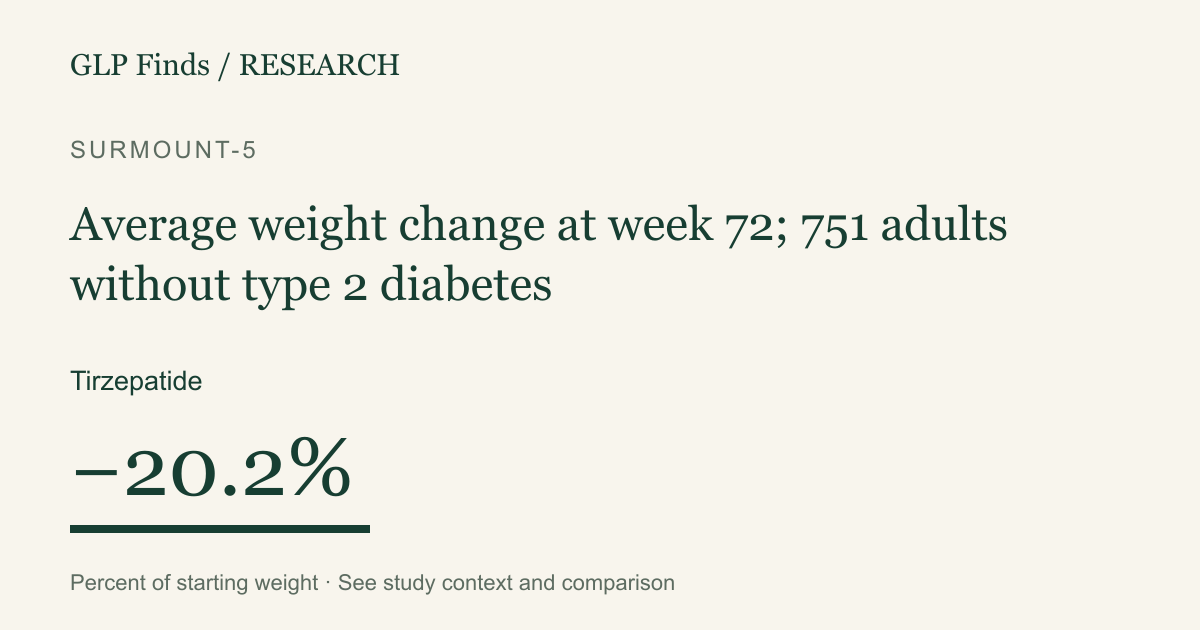
A direct 72-week comparison of weekly tirzepatide and semaglutide in adults without type 2 diabetes.
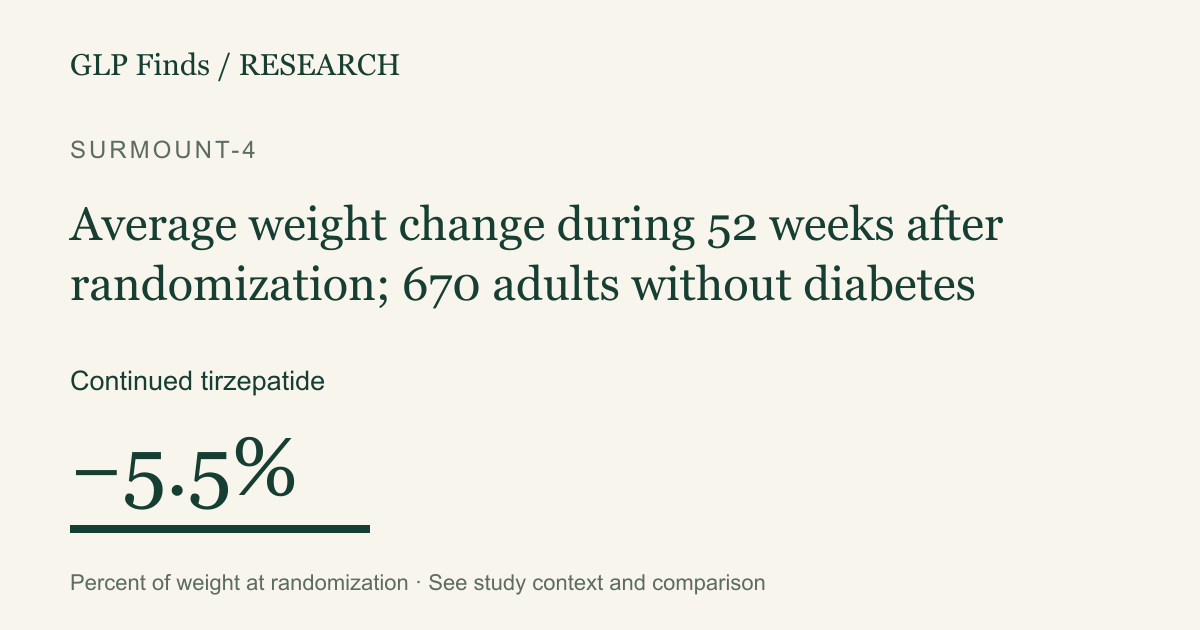
A randomized withdrawal trial studied continued tirzepatide after initial weight loss.
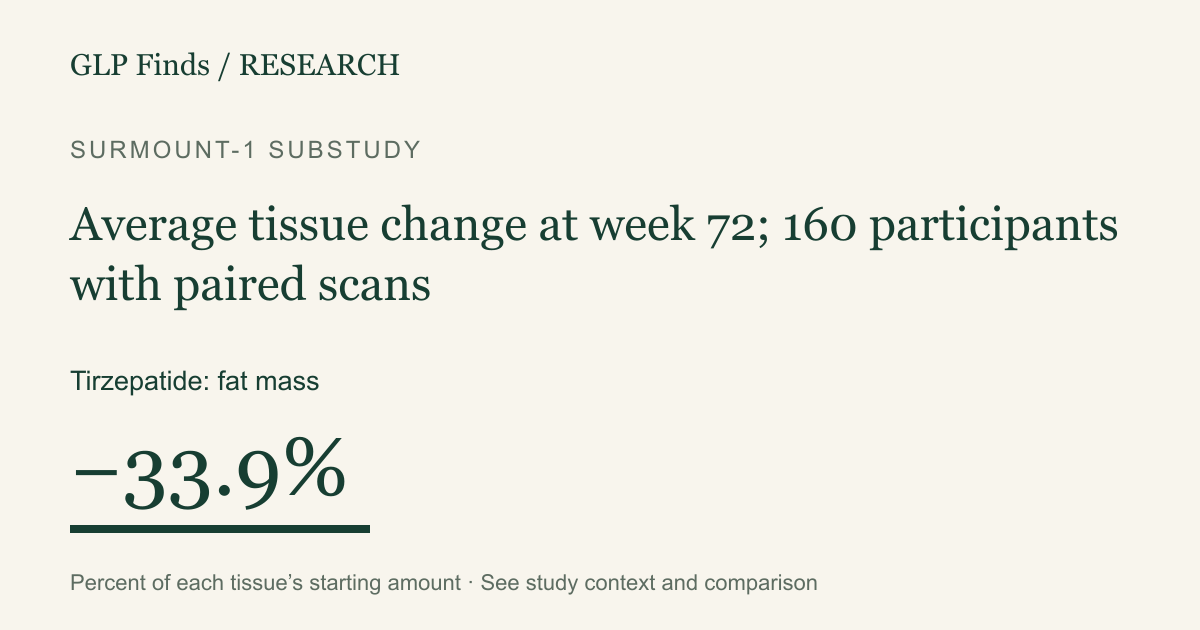
A body-composition substudy looked at fat and lean mass after weight loss.
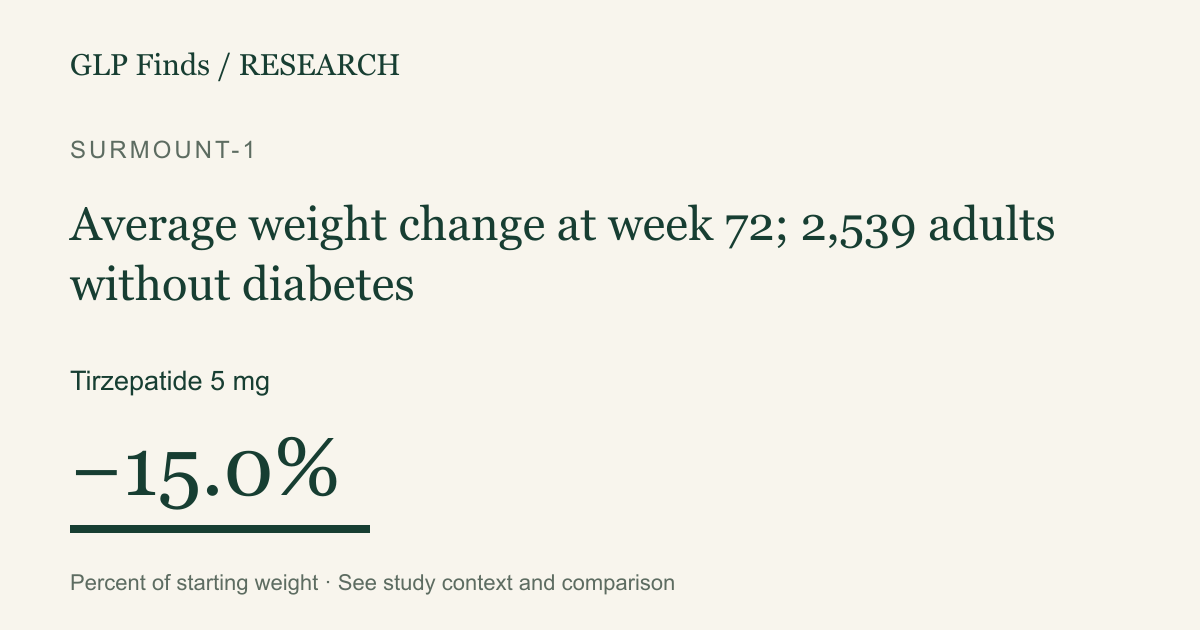
A 72-week trial compared three tirzepatide doses with placebo in adults without diabetes.
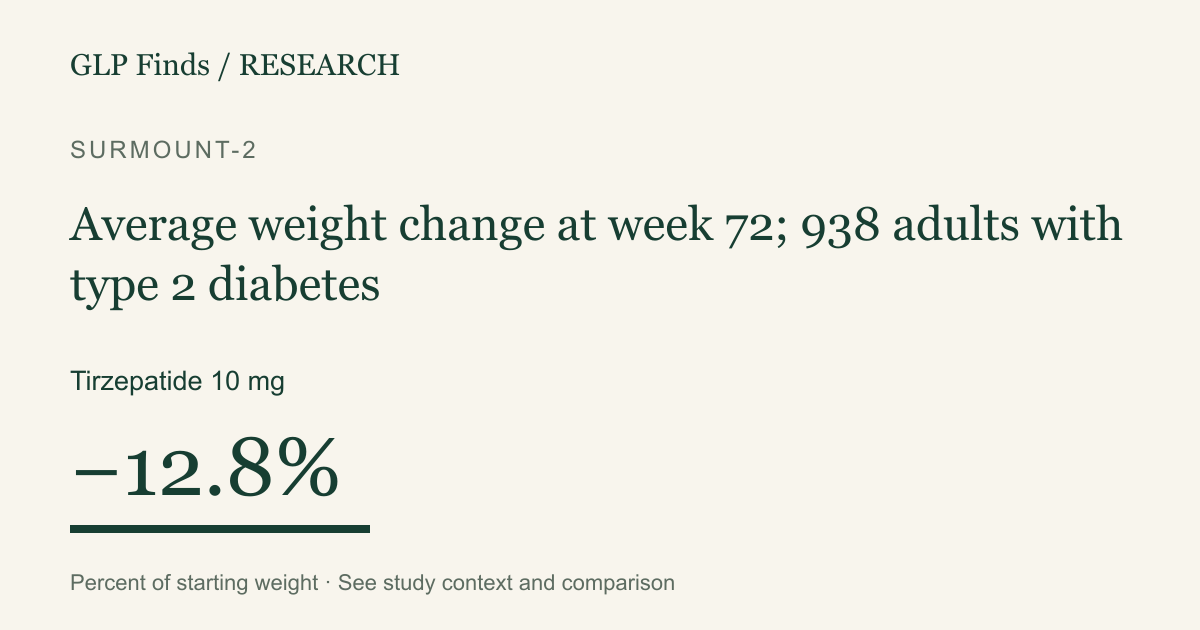
A 72-week trial compared tirzepatide with placebo in adults with type 2 diabetes.
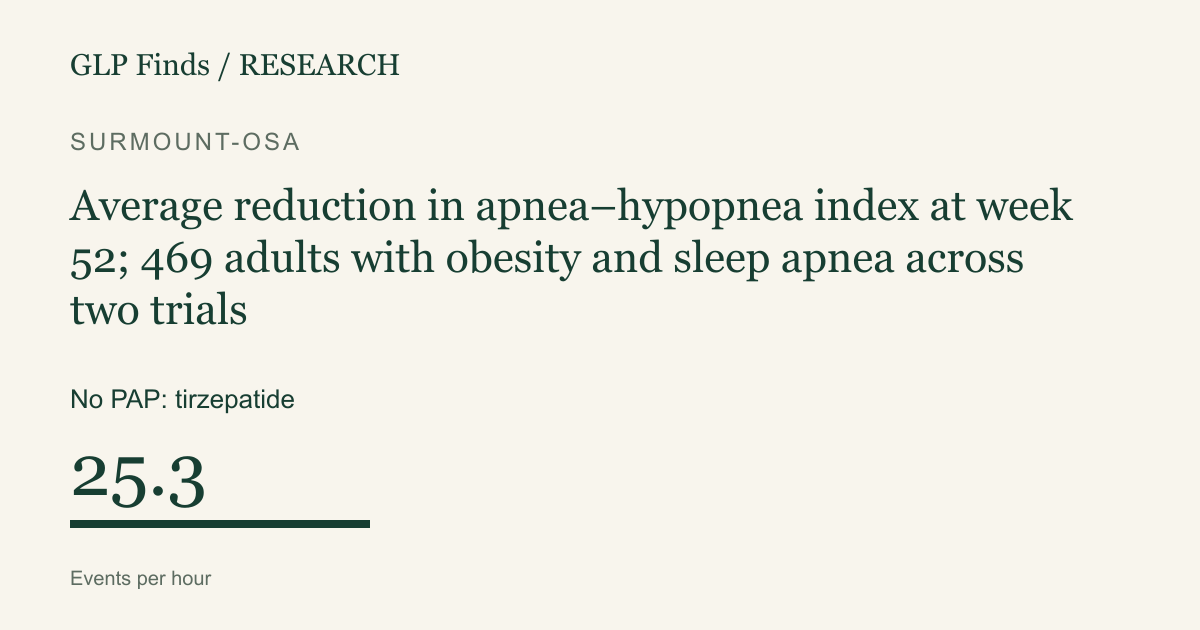
Average reduction in apnea–hypopnea index at week 52; 469 adults across two trials.
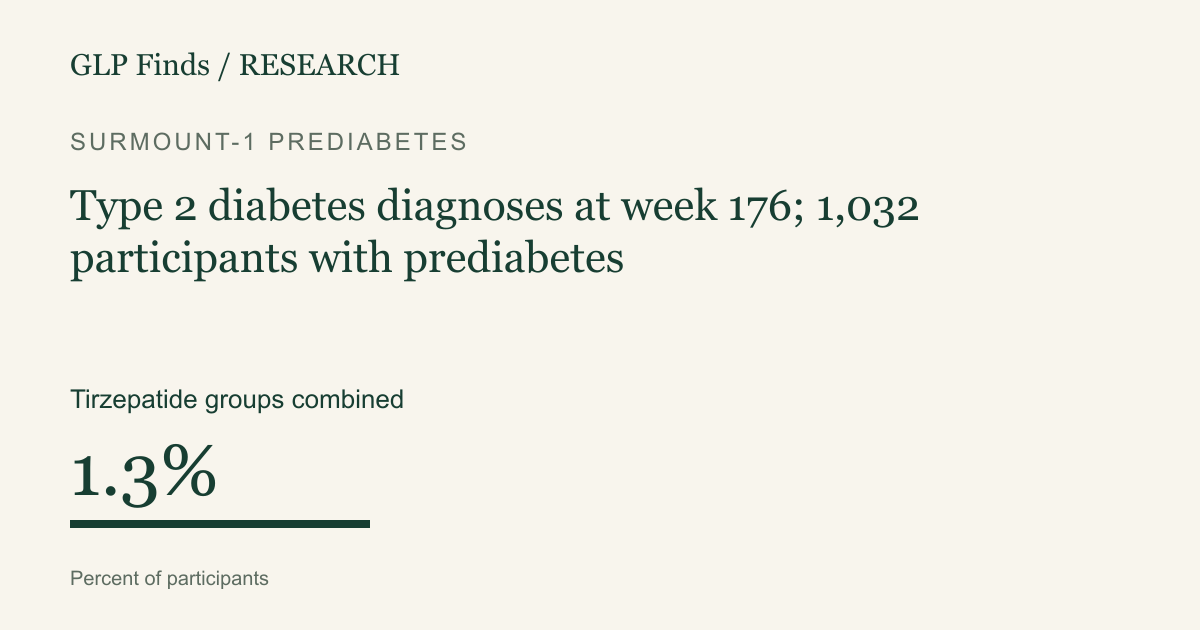
Type 2 diabetes diagnoses at week 176; 1,032 participants with prediabetes.
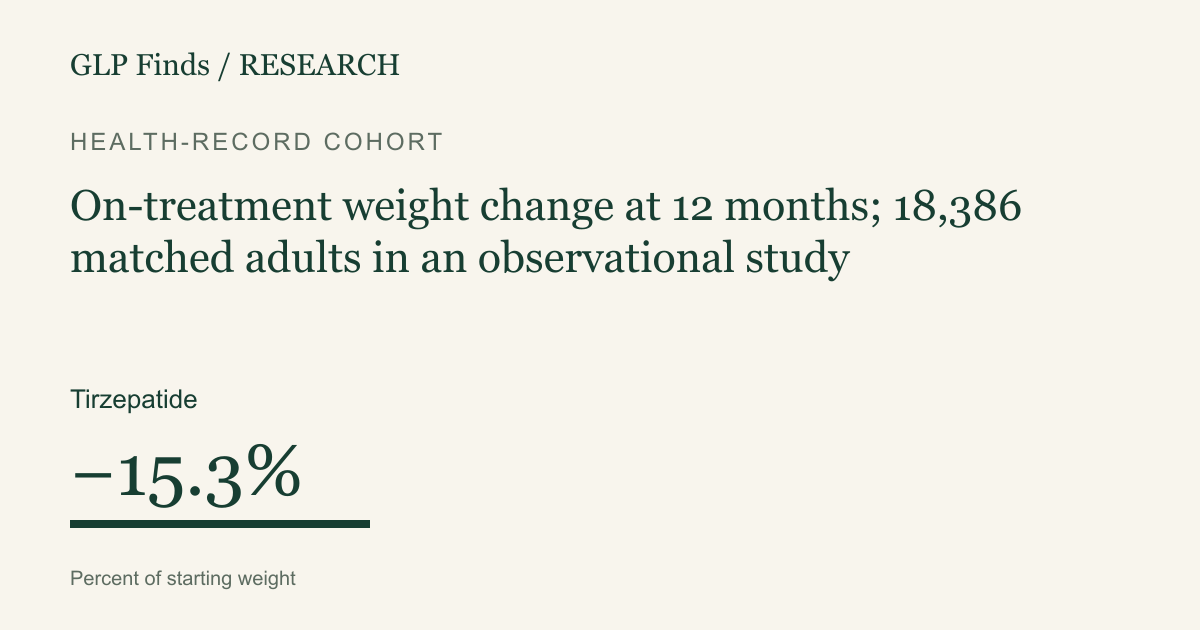
Estimated on-treatment weight change at 12 months; 18,386 matched adults.
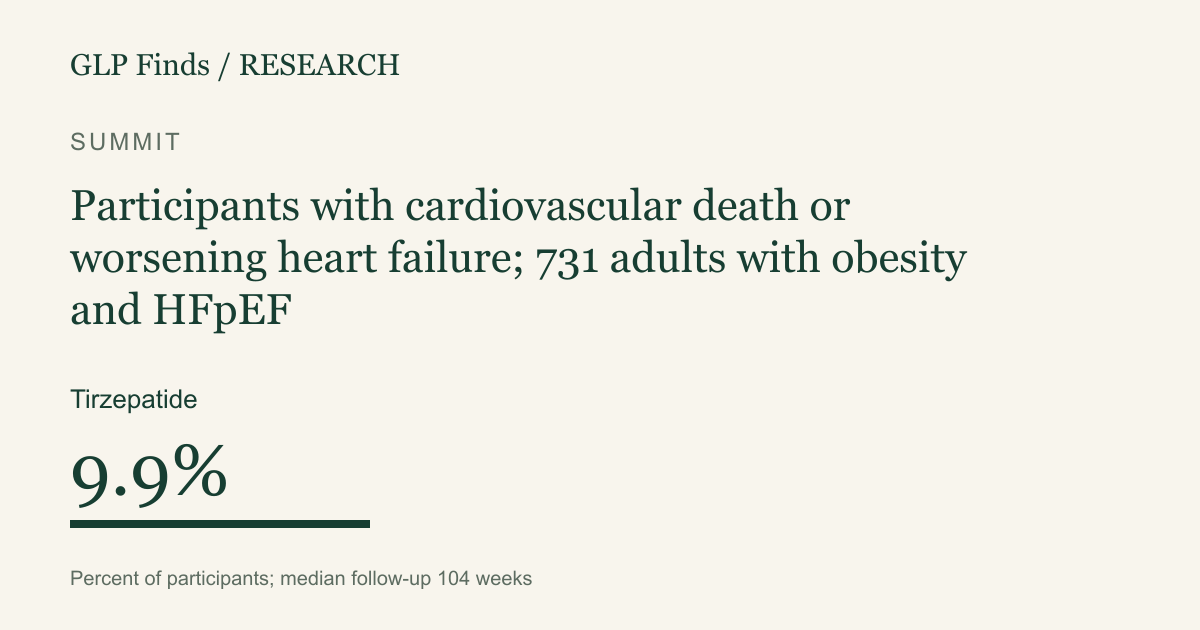
Participants with cardiovascular death or worsening heart failure; 731 adults.
Interviews explored everyday experiences after participation in SURMOUNT-4.
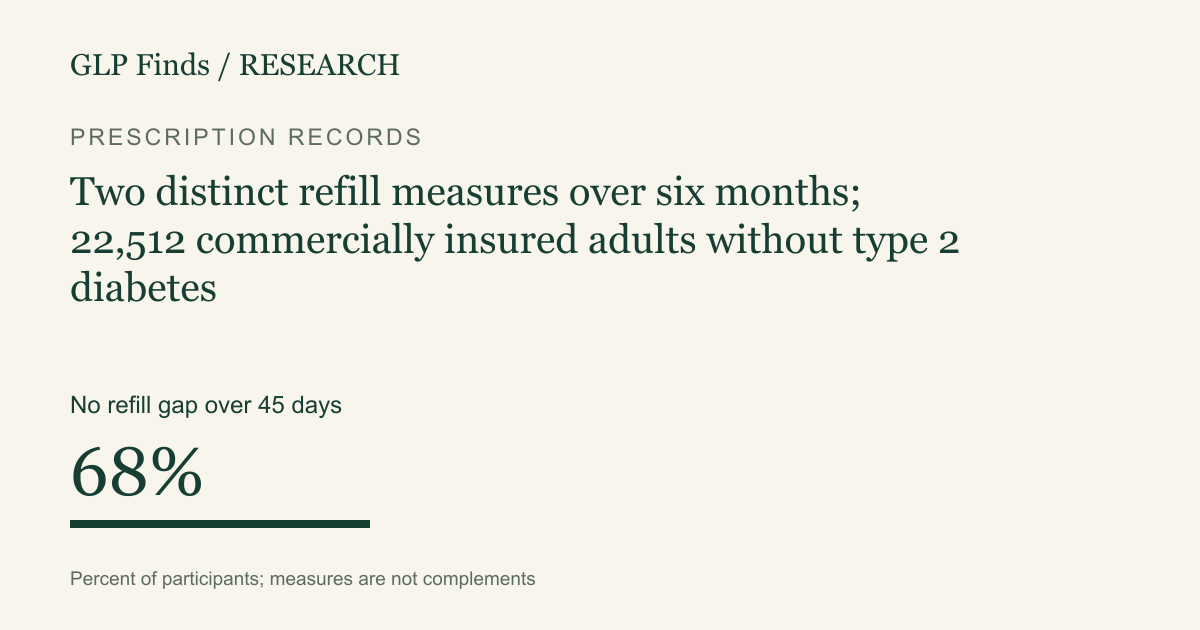
An insurance-record study examined tirzepatide prescription coverage over six months.
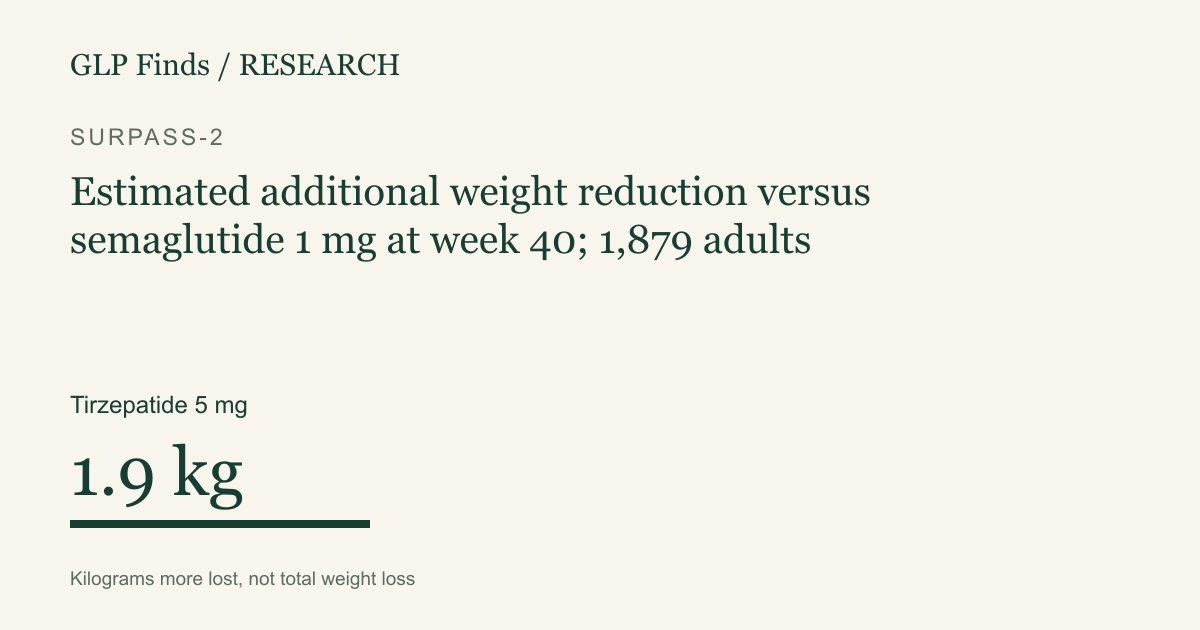
SURPASS-2 compared tirzepatide with semaglutide 1 mg in adults with type 2 diabetes.
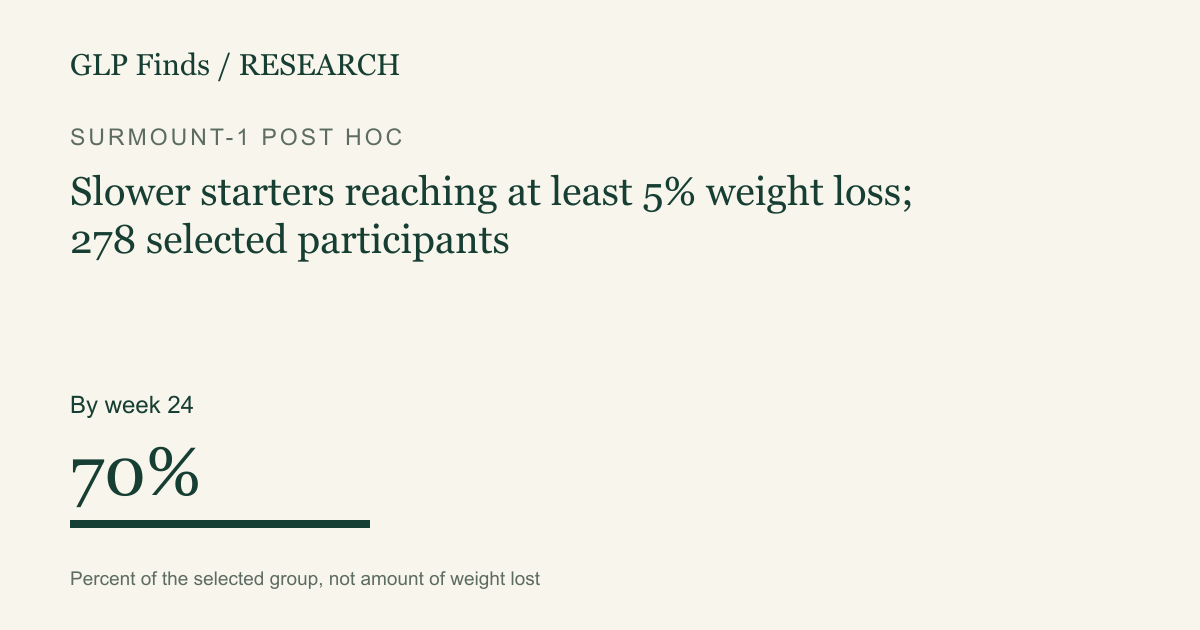
A post hoc analysis followed selected participants whose initial weight loss was slower.
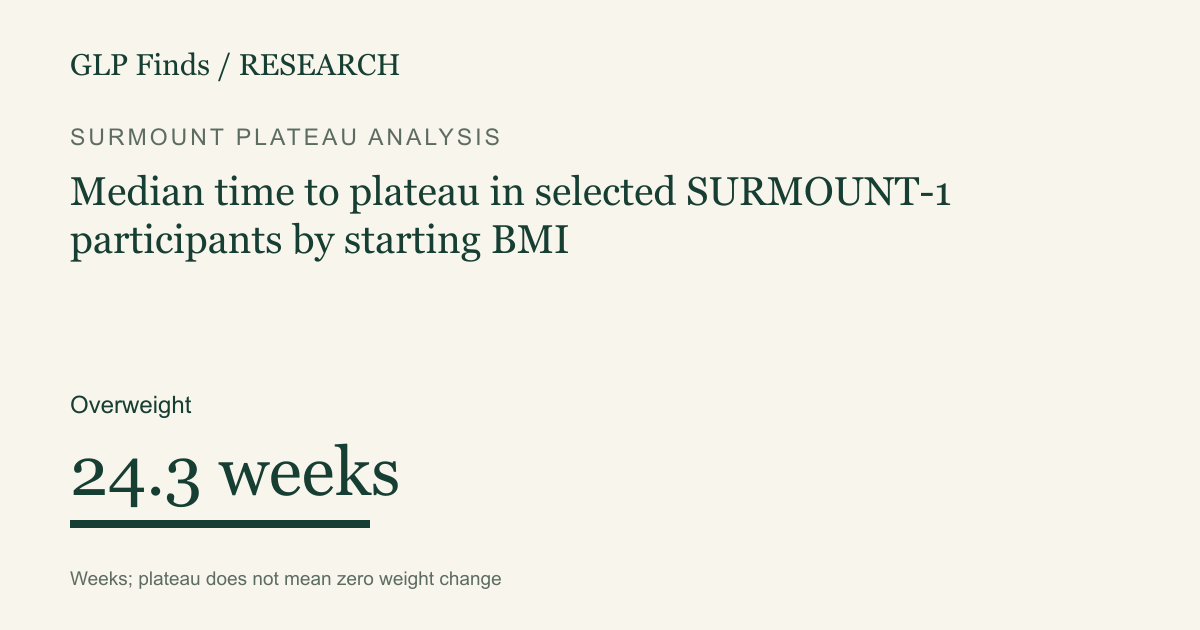
A secondary analysis examined plateau timing among selected tirzepatide responders.
A post hoc analysis examined digestive symptoms and weight outcomes in four trials.
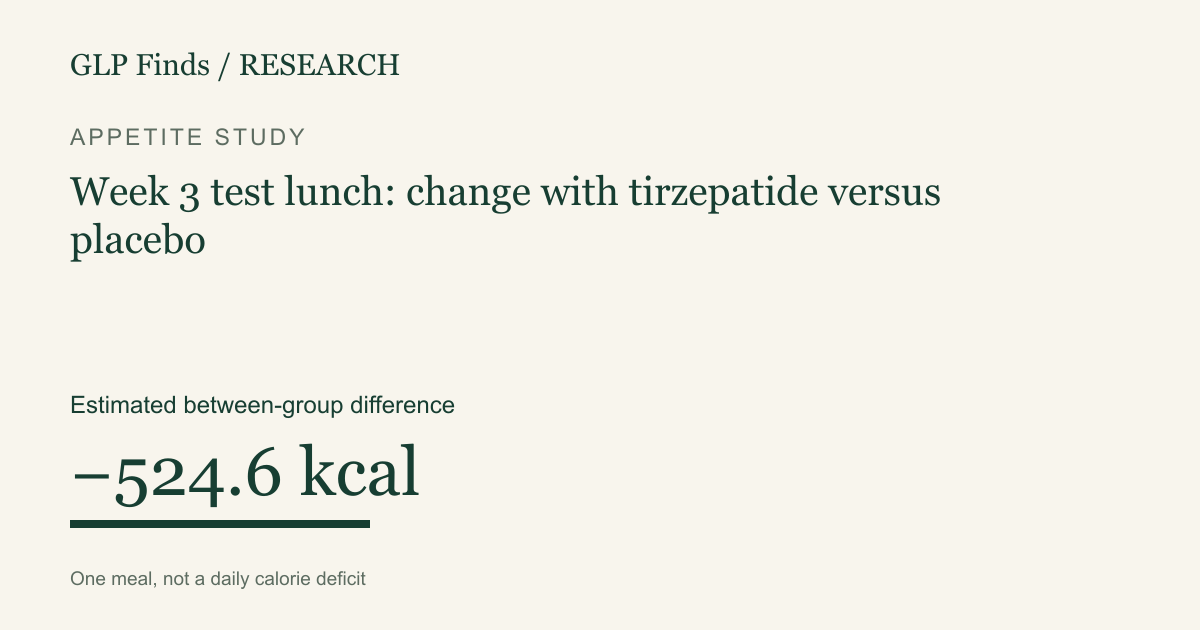
A six-week trial examined food intake and appetite with tirzepatide.
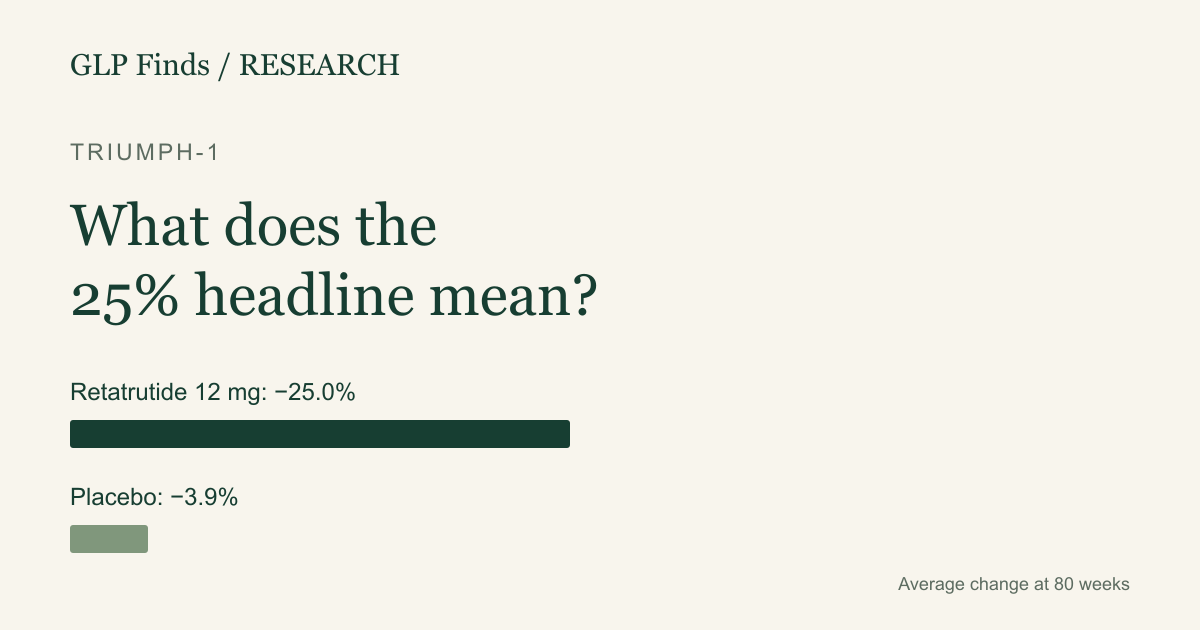
Explore the 80-week results for an investigational medicine and what a placebo comparison can show.
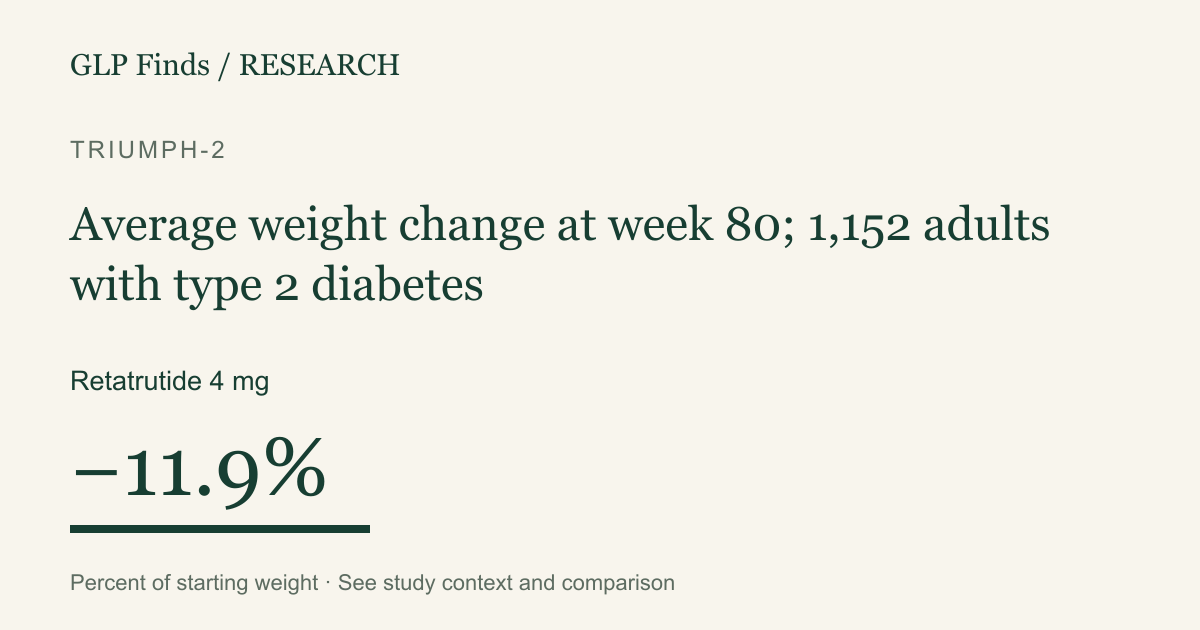
TRIUMPH-2 studied investigational retatrutide in adults with type 2 diabetes.
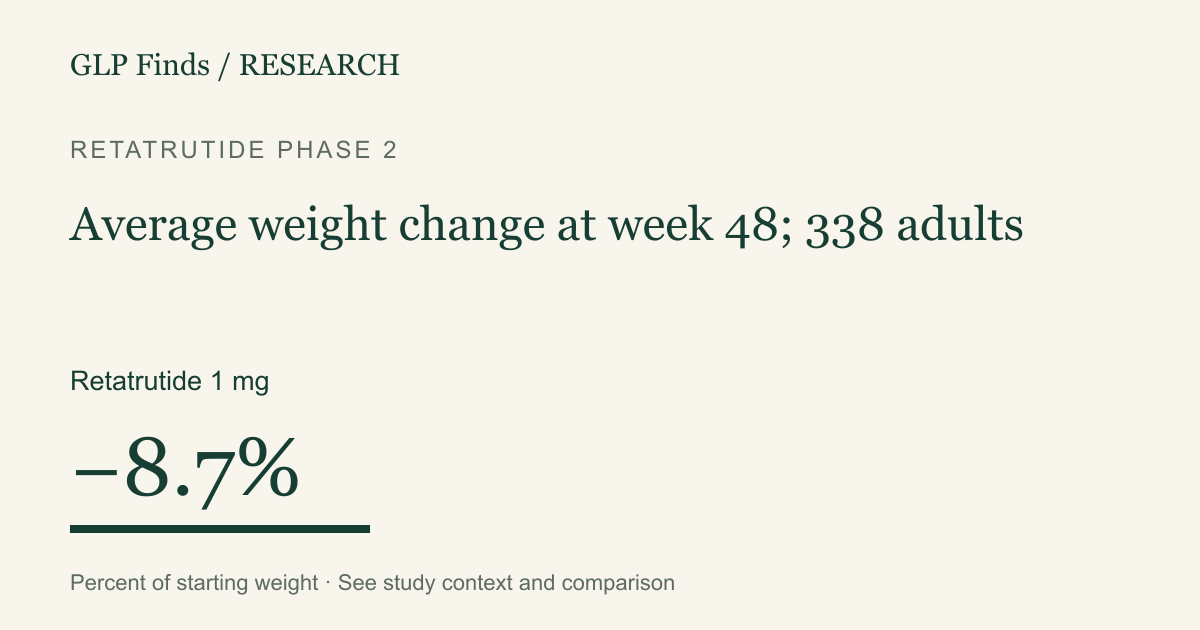
An early trial explored investigational retatrutide doses and weight loss over 48 weeks.
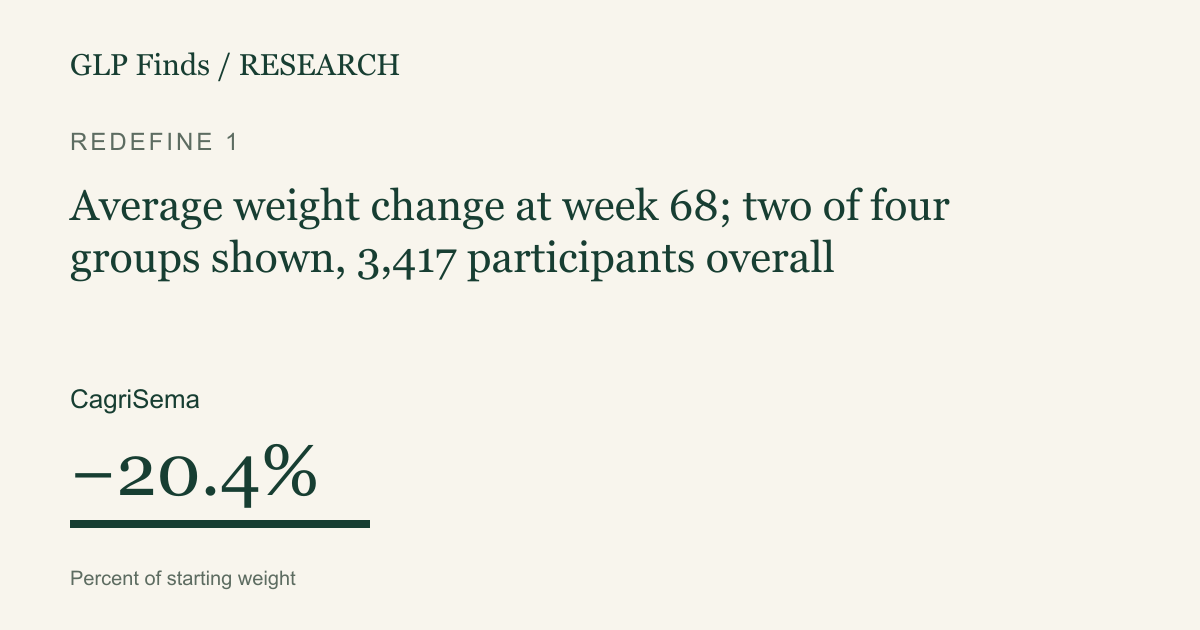
Average weight change at week 68; two of four groups shown, 3,417 participants overall.
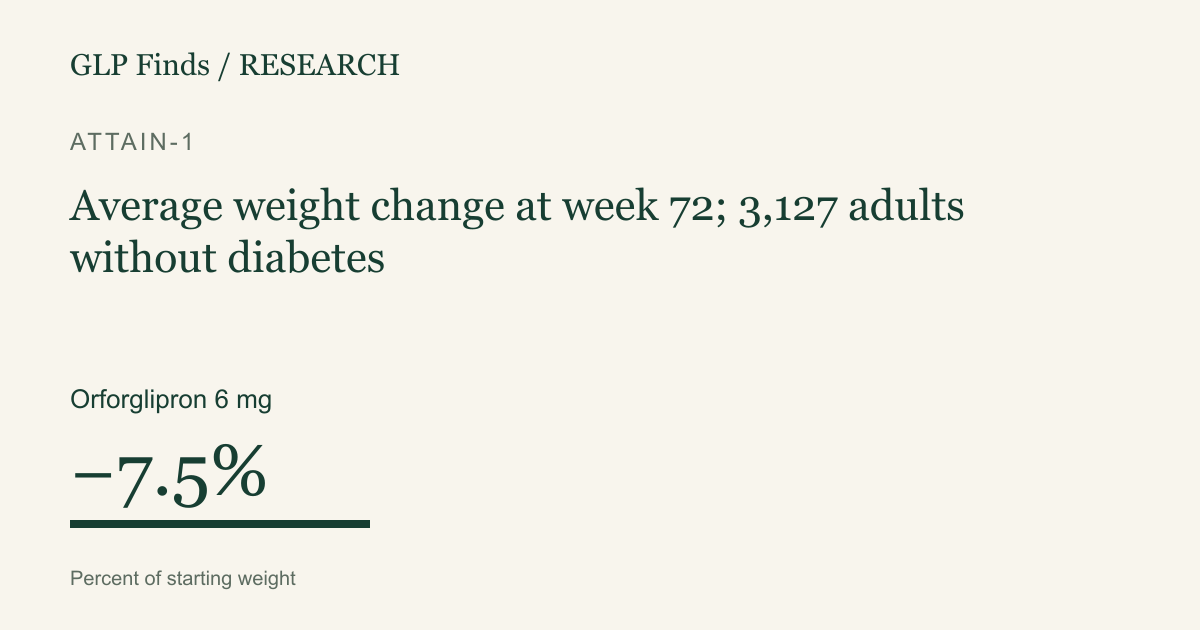
Average weight change at week 72; 3,127 adults without diabetes.
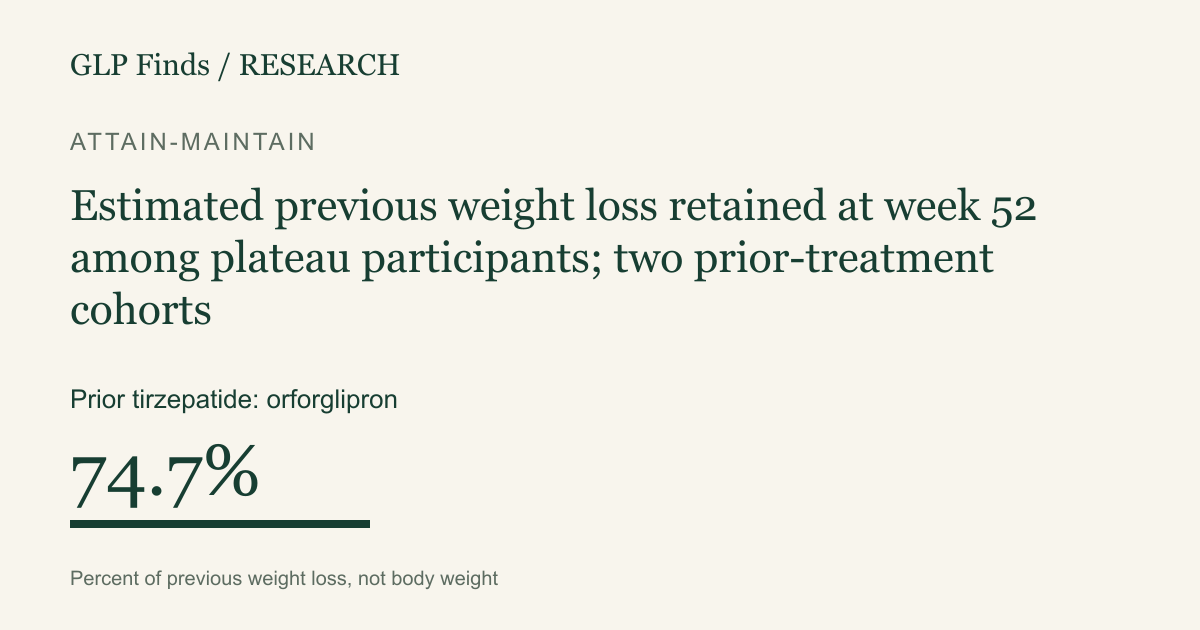
Estimated previous weight loss retained at week 52 among plateau participants; two prior-treatment cohorts.
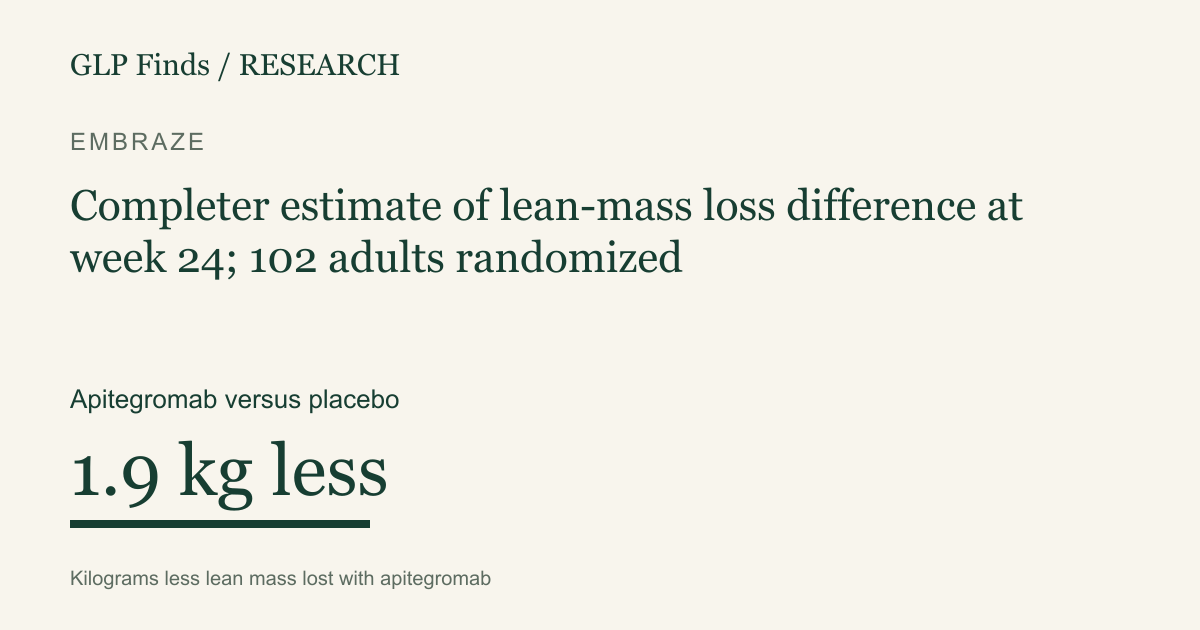
Estimated difference in lean-mass loss at week 24; 102 adults randomized.
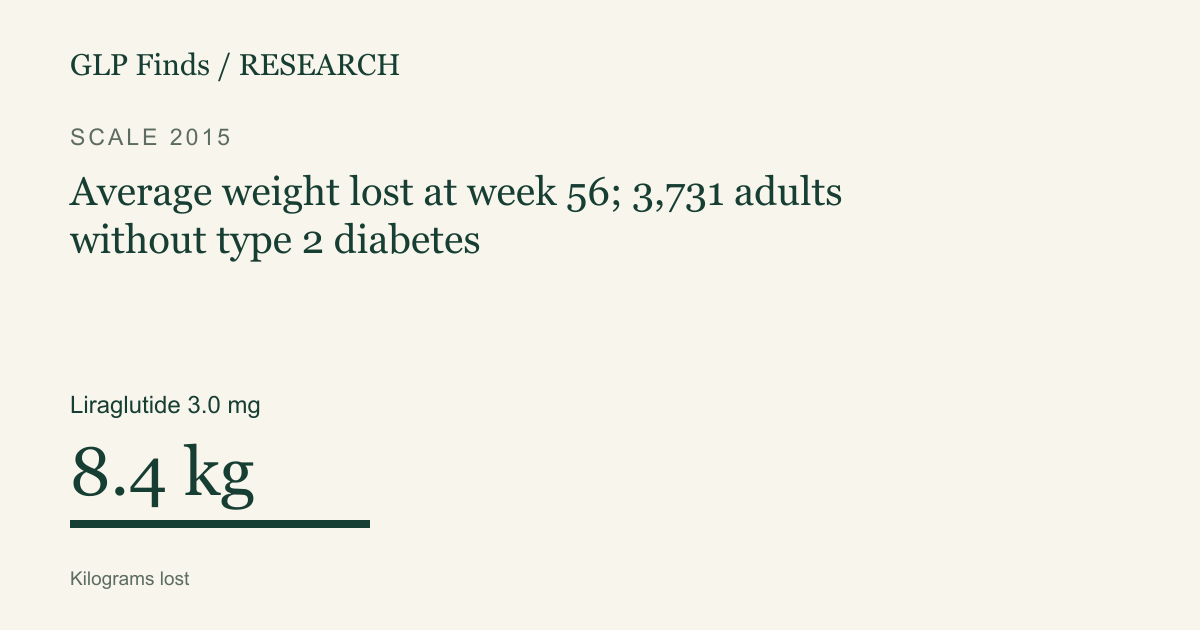
SCALE studied daily liraglutide alongside lifestyle support in adults without type 2 diabetes.
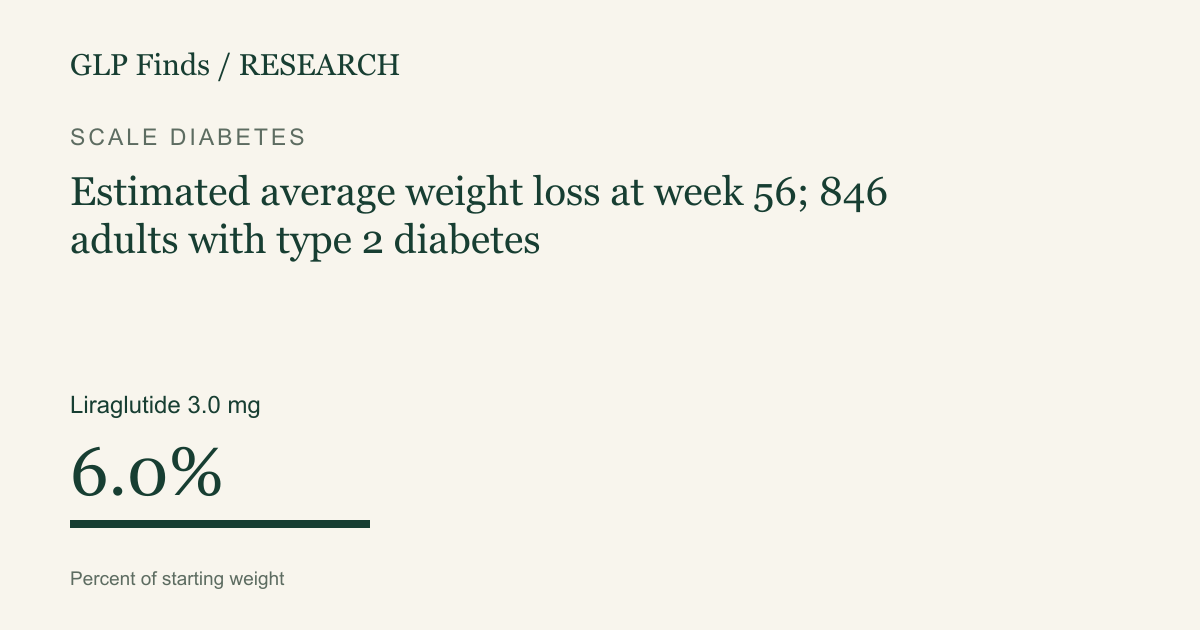
SCALE Diabetes tested liraglutide alongside lifestyle support in adults with type 2 diabetes.
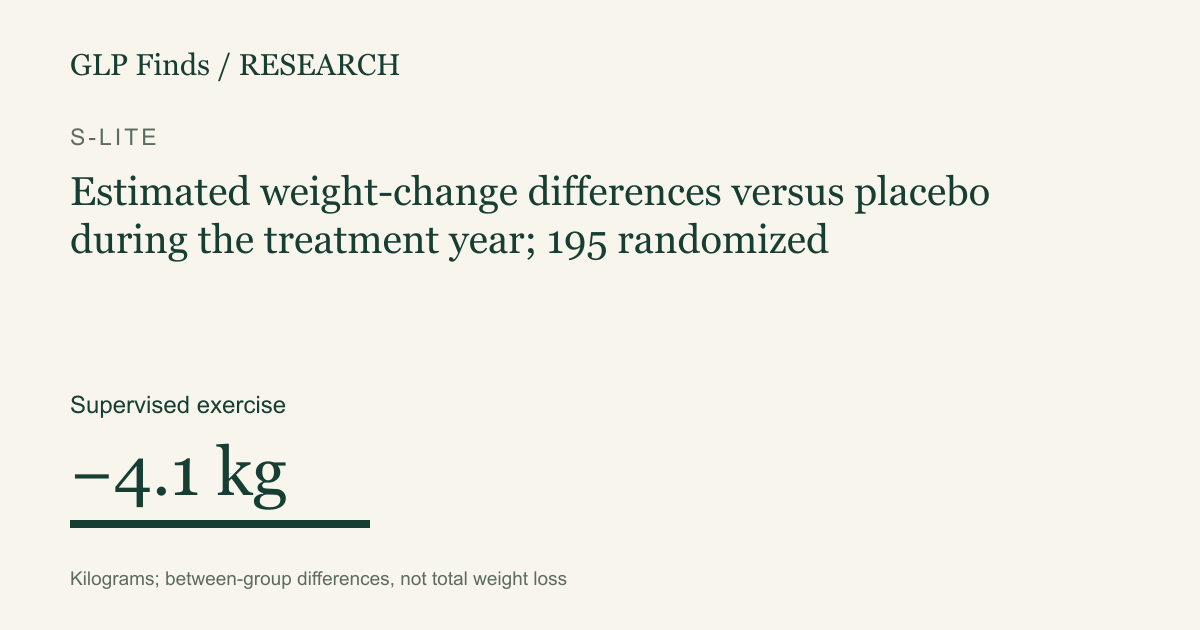
S-LiTE studied exercise and liraglutide after an initial low-calorie diet.
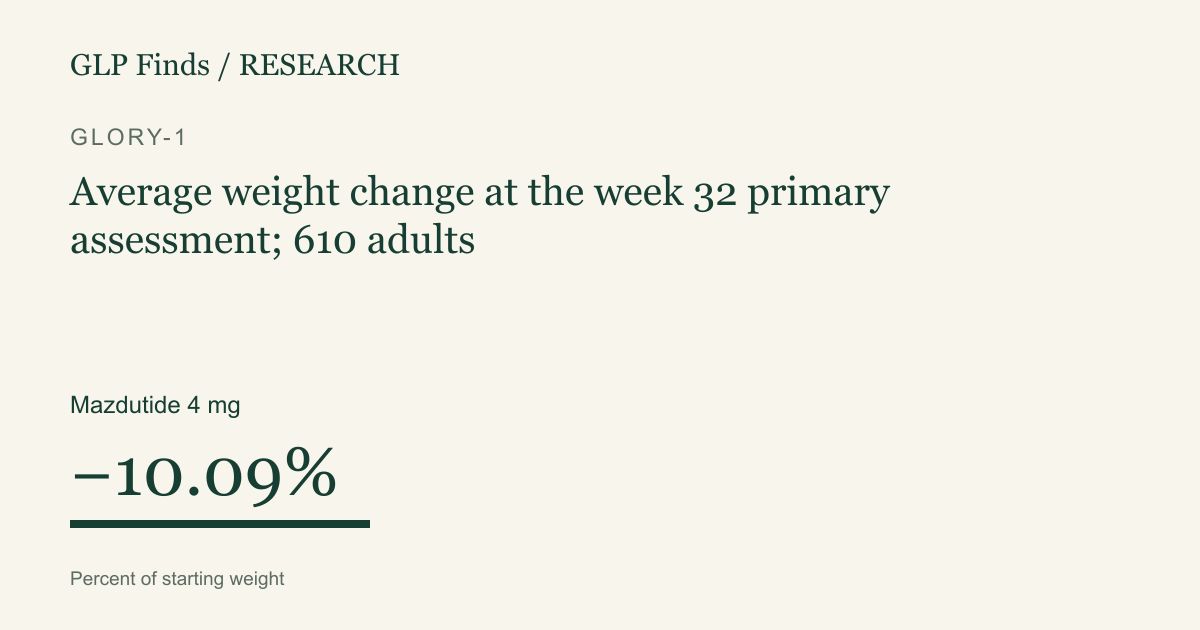
GLORY-1 studied weekly mazdutide in adults with overweight or obesity in China.
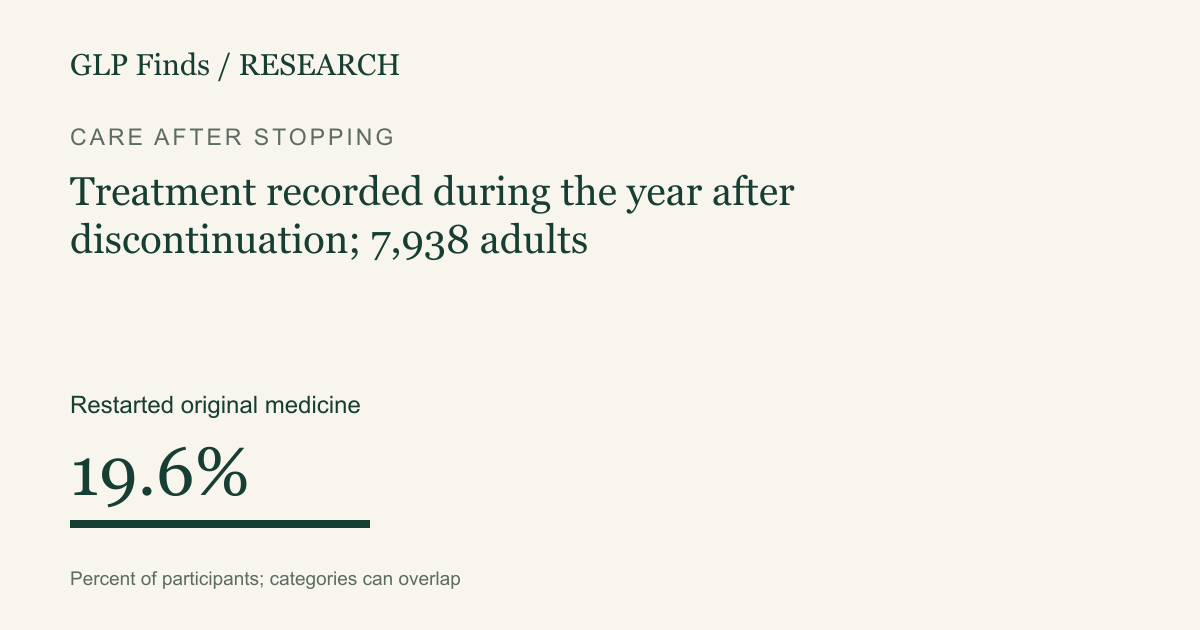
A health-system study followed care after injectable GLP medicine prescriptions stopped.
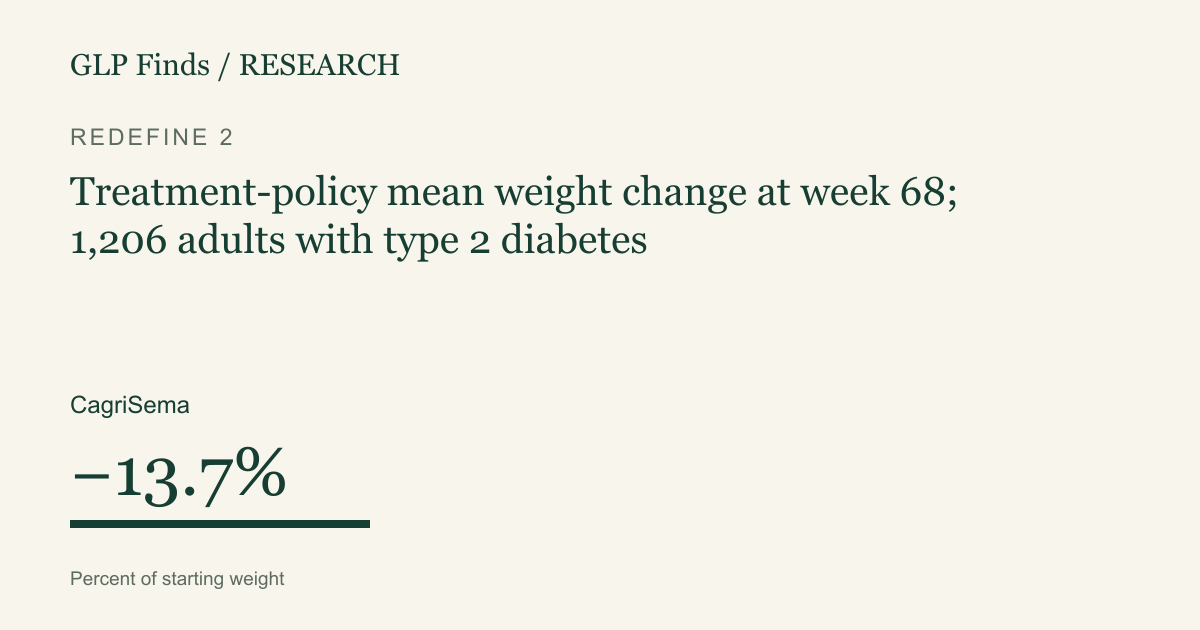
REDEFINE 2 compared CagriSema with placebo in adults with type 2 diabetes.
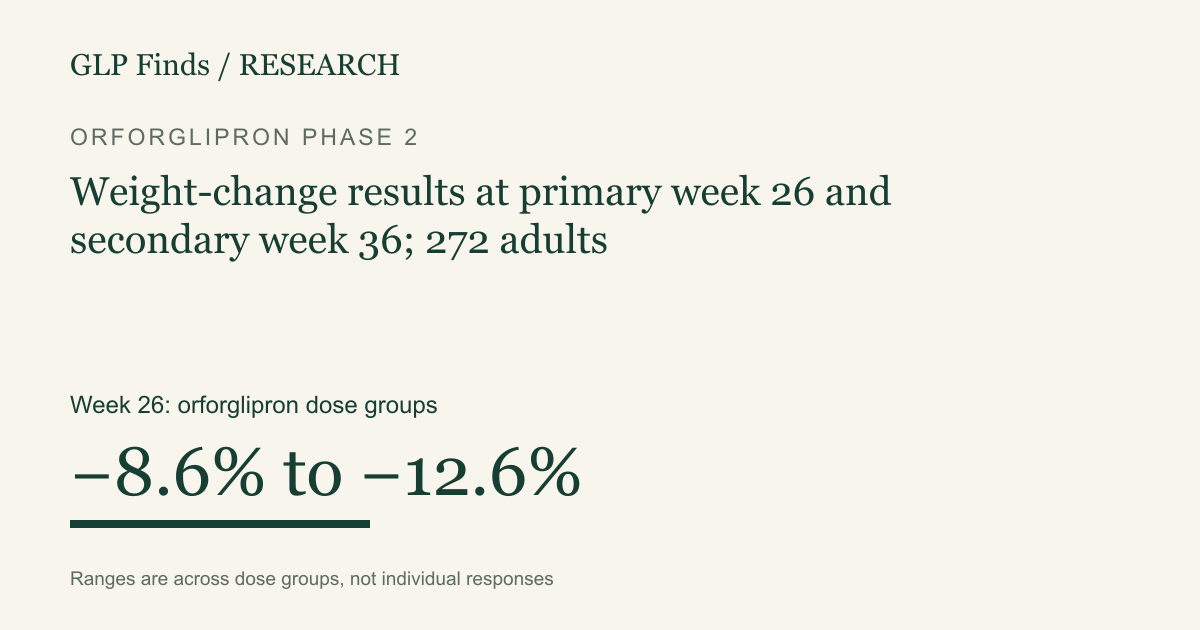
A phase 2 trial examined oral orforglipron in adults without diabetes.
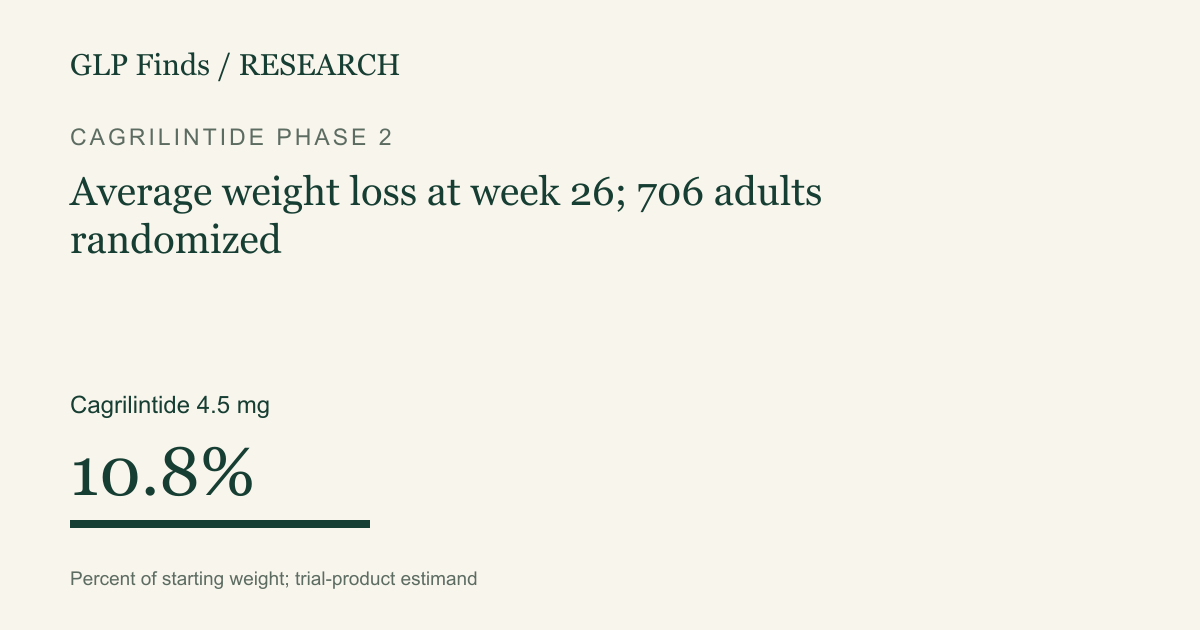
A phase 2 trial studied cagrilintide, an amylin analogue, in adults without diabetes.
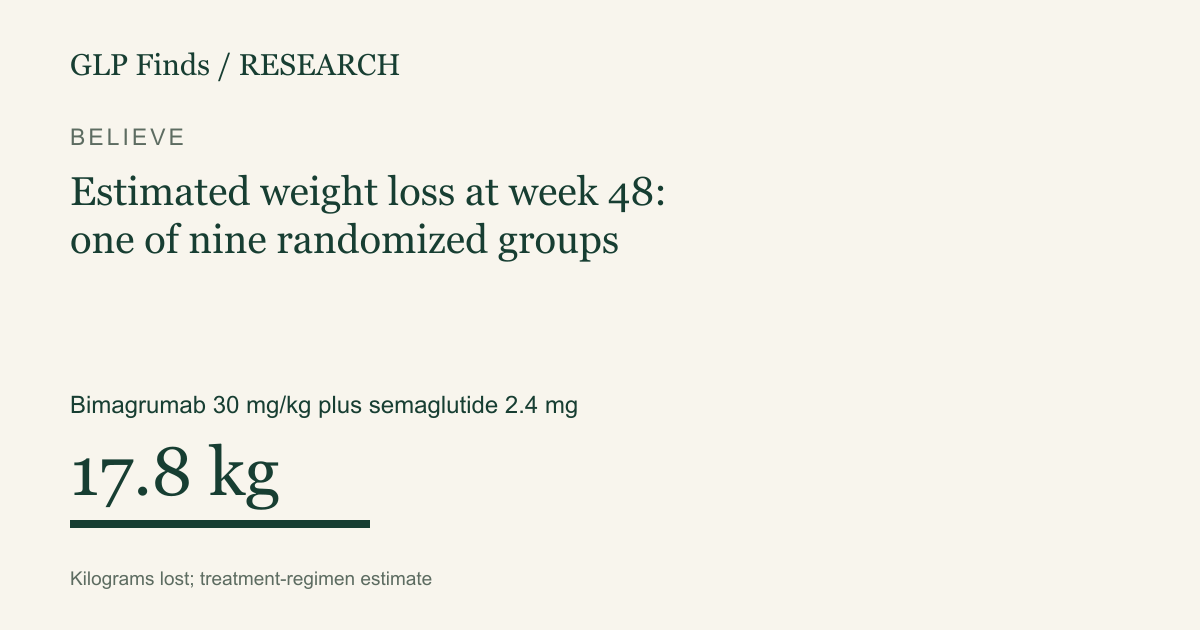
BELIEVE studied body composition and weight outcomes with experimental bimagrumab and semaglutide.
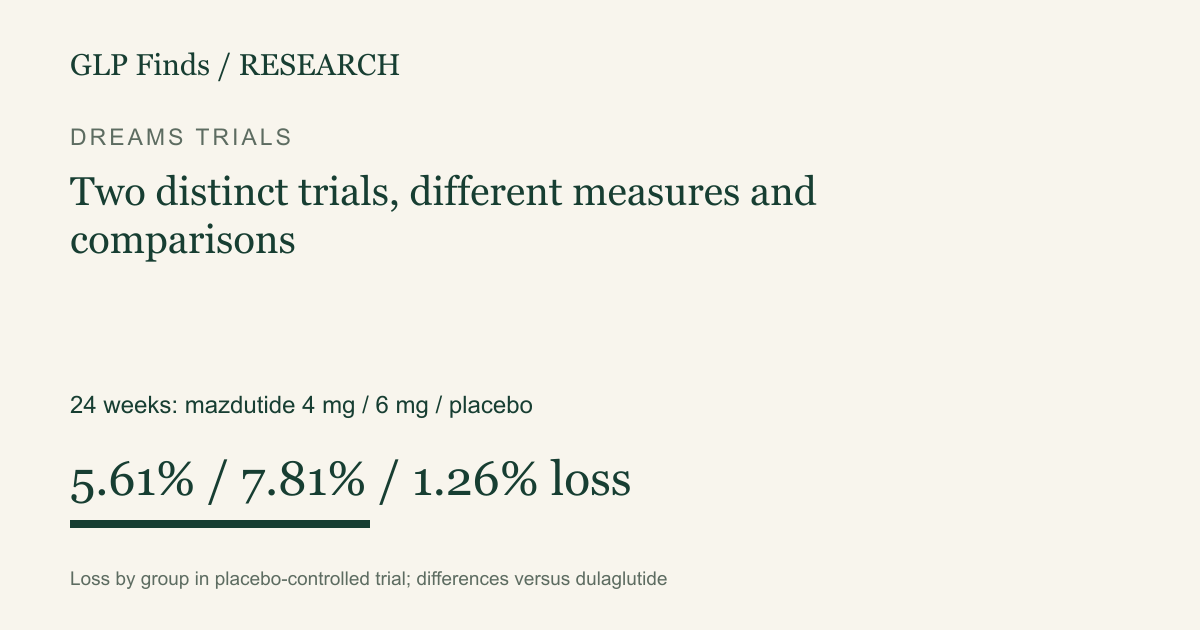
Two trials studied mazdutide in adults with type 2 diabetes.
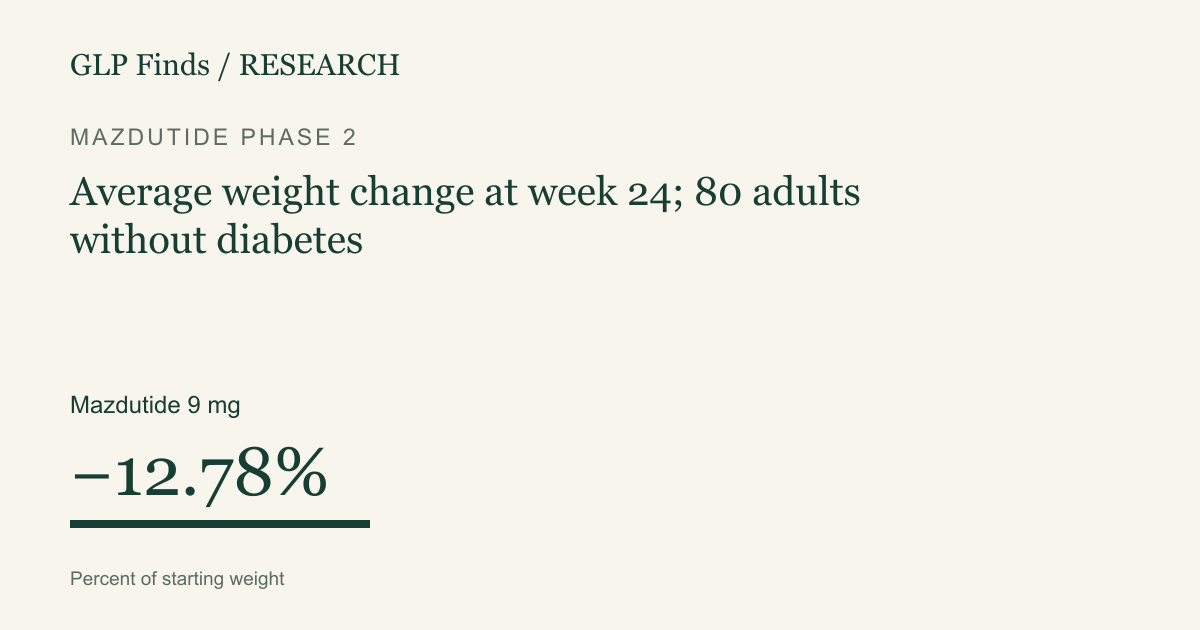
A small phase 2 trial examined weekly mazdutide 9 mg in China.
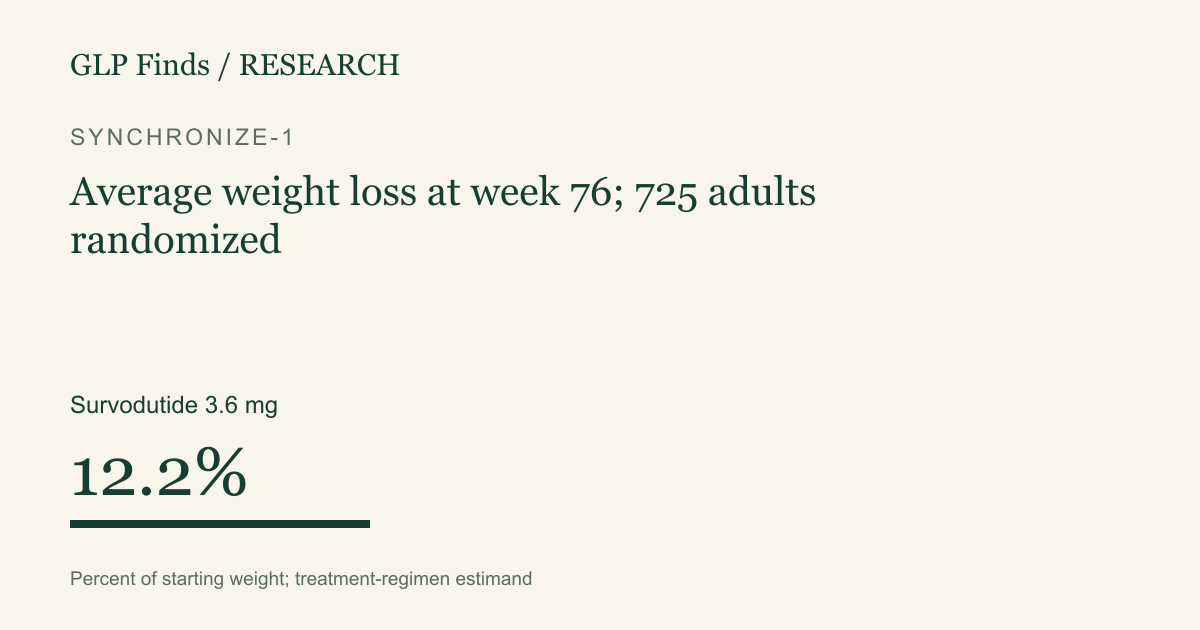
A phase 3 trial compared survodutide with placebo in adults without diabetes.
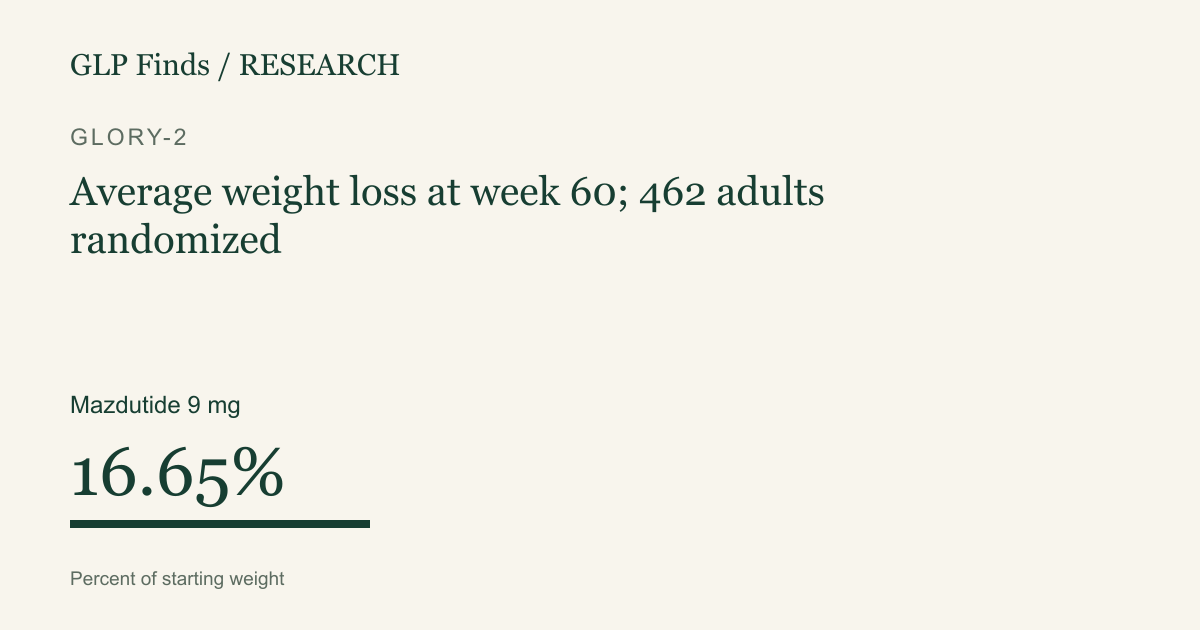
GLORY-2 studied mazdutide 9 mg in adults with obesity in China.
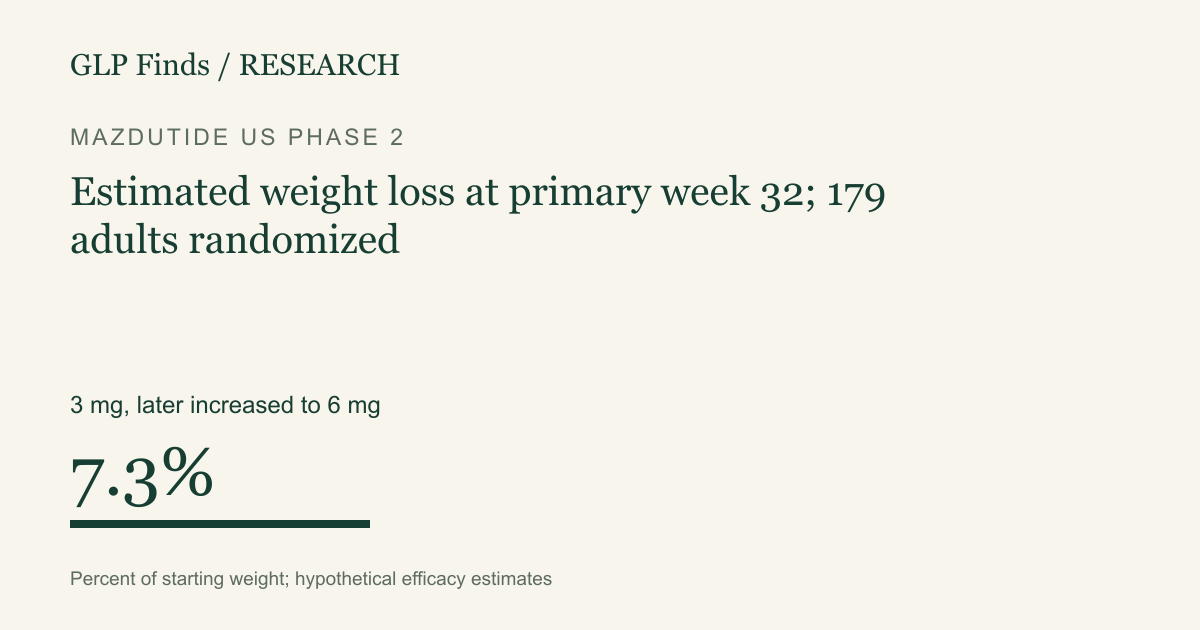
A US dose-finding trial studied mazdutide in adults without type 2 diabetes.
Two analyses studied patient-reported outcomes in different trial settings.