Choose the writing habit you will keep
BookFactory’s compact Wire-O log is the smaller carry-along option, with a photographed weekly tracking grid. The GLP-1 Journal is a larger 90-day companion whose seller describes daily ratings, appointment notes and periodic check-ins. Choose by where you will write and how much structure you enjoy.
A pocket notebook can make a quick observation easy to capture. A larger prompted journal may suit someone who likes sitting down with a longer entry. Neither format determines which health measures you need to track.
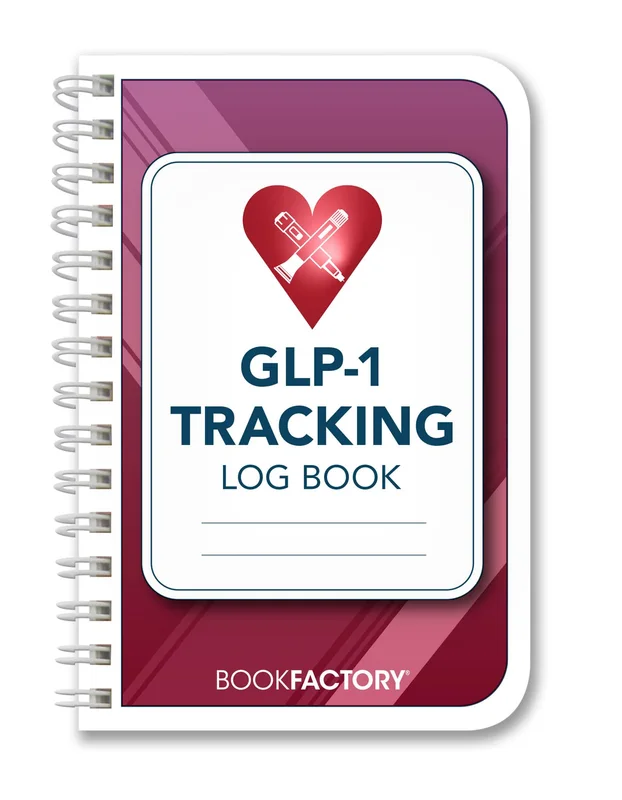
Pocket-size notebook; the profile gallery includes actual interior spreads.
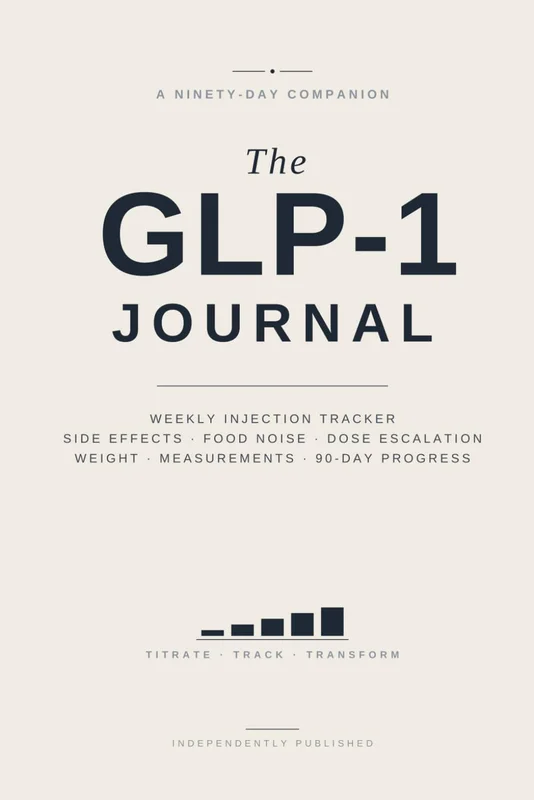
Larger soft-cover format. The interior functions below are seller descriptions.
The concrete notebook differences
| Detail | BookFactory | The GLP-1 Journal |
|---|---|---|
| Pages | 104 | 150 |
| Overall size | 3.5×5.25 in | 6×0.34×9 in |
| Structure | Wire-O; photographed weekly two-page grid | 90-day companion; seller describes daily/weekly logs and check-ins |
| Interior evidence | Actual frontmatter and weekly spread viewed | Seller description; interior pages not available in the sources reviewed |
| Main planning question | Will a small grid fit my short notes? | Do I want larger pages and more guided prompts? |
Overall dimensions are not measured writing-area dimensions. Page count also does not tell us paper thickness, how a pen feels on it or whether the binding lies flat under use.
What the layouts invite you to record
The BookFactory photos show frontmatter for health conditions, allergies, other medicines and goals. The weekly spread groups dates, routine observations and a summary, including printed fields for appetite, sleep and other measures. A printed field is an invitation to write, not a medical instruction to measure everything every day.
The GLP-1 Journal seller describes food-noise, hunger, energy and mood ratings, injection records, appointment/bloodwork notes and a medication/supplement log. Because no actual interior was available, we cannot compare the precise box sizes or claim the prompts are identical to BookFactory’s.
If a small grid becomes a chore, use only the fields that help you prepare for your appointments. If broad prompts lead to pages of unfocused notes, keep a separate short question list at the front.
Try your next entry before choosing
Write a trial note on ordinary paper: “Tuesday: lunch was hard to organize between meetings. A ready-to-drink option in the work fridge would be easier. Question for next visit: how should I plan food on days when my schedule changes?” This fictional example records a practical obstacle and a question without directing a medicine change.
Now ask where it would go. Do you prefer a few words in a weekly box or a larger daily paragraph? Would you carry the notebook to work, keep it by the kitchen, or use it mainly before appointments? Those answers are more useful than choosing the largest page count automatically.
Can a blank notebook do the same job?
Yes. Divide a page into date, observation, practical obstacle and question. Add the next agreed action after an appointment. The printed products mainly supply structure and packaging.
Does a journal replace the care record?
No. It can help you communicate observations, while the clinical record and prescribed plan stay with the care team. Keep sensitive paper notes somewhere private.
Read next
Sources and method
- BookFactory exact product and retailer source — 104 pages, 3.5×5.25 in, Wire-O. Existing interior photos checked. The profile links the exact retailer listing; retailer exits may earn a commission.
- The GLP-1 Journal exact product and retailer source — 90-day title, 150 pages, 6×0.34×9 in. Interior functions are seller-described; no interior image was available. The profile links the exact retailer listing; retailer exits may earn a commission.
Sources checked October 29, 2026.
Prepared by GLP Finds with AI-assisted writing and checked against the listed sources. Our editorial process.