The three priorities work together
Preserving muscle during weight loss starts with giving muscles regular work, eating enough to support an individually appropriate nutrition plan, and noticing how your strength and everyday function change. A useful routine connects all three. Put activity sessions in the diary, identify foods you can manage on busy or lower-appetite days, and bring meaningful observations to follow-up appointments.
The 2025 joint nutrition advisory on GLP-1 therapy emphasizes structured strength training alongside adequate nutrition. Protein intake by itself does not provide the training stimulus. This is a planning question as much as a shopping question: the convenient food is the one you can prepare and use within a realistic day.
Start by writing down your current pattern. Where does a meal get missed? Which activity have you stopped doing? What makes a session difficult to repeat? Those specifics give a dietitian, physiotherapist, exercise professional or prescribing team more useful information than a general request for a muscle-preservation supplement.
Lean mass is broader than skeletal muscle
Body weight includes fat and many other tissues. A body-composition report may call some of those tissues lean mass or fat-free mass; the exact measurement method matters. A change in a DXA lean-mass estimate is not a direct measure of muscle strength, and a bathroom scale cannot diagnose a muscle condition.
| Measure | Useful question | What else to consider |
|---|---|---|
| Scale weight | How is total weight changing over time? | It does not separate fat, muscle or water. |
| Body-composition estimate | How does the measured fat/lean pattern change? | Method and measurement conditions affect interpretation. |
| Strength and everyday function | How are the tasks that matter to me going? | Use consistent observations and clinician-selected assessment when needed. |
In the SURMOUNT-1 DXA substudy, 160 participants had baseline and 72-week measurements. Approximately three quarters of the weight lost was fat and one quarter was lean mass in both the tirzepatide and placebo groups. That last figure is a share of weight lost, not a statement that participants lost a quarter of their starting muscle.
For an arithmetic illustration, one quarter of a 20 kg total loss is 5 kg. That does not identify how much was skeletal muscle, predict an individual’s result or describe function. The distinction helps explain why a plan should follow more than a single body-composition number.
Give activity a place in the week
The CDC’s general adult guidance combines at least two days of muscle-strengthening activity with 150 minutes of moderate aerobic activity, or an equivalent vigorous combination. It also emphasizes that some activity is better than none. This is general guidance, rather than a GLP-specific program tested for every reader.
Choose a practical way to establish suitable sessions: an existing program you can follow consistently, an introduction at a gym, or support adapted to your mobility and experience. Ask what work is appropriate for the major muscle groups and how progress will be assessed. A plan written for your circumstances is more useful than copying a stranger’s weights and repetitions.
A 2021 randomized study followed 195 adults after an initial diet phase and studied exercise, liraglutide, their combination and placebo for a year. Its findings support attention to exercise alongside weight management. The exercise program was mainly aerobic, so it should not be presented as proof of a particular resistance routine for tirzepatide or retatrutide.
Make the food plan usable
Begin with eating occasions you already have. A breakfast might include yogurt or eggs; a lunch might use beans, tofu, fish or another familiar protein-containing food. Think about preparation, portion and the rest of the meal. If intake is difficult, bring a short record of what you manage so your nutrition plan can be adjusted with appropriate support.
Ask how a proposed protein target was chosen, including the body-weight basis and any relevant health conditions. The joint advisory discusses possible targets, but it does not settle a single grams-per-kilogram rule for everyone. Bring the proposed target and a short food record so you can discuss how to use the plan through the day.
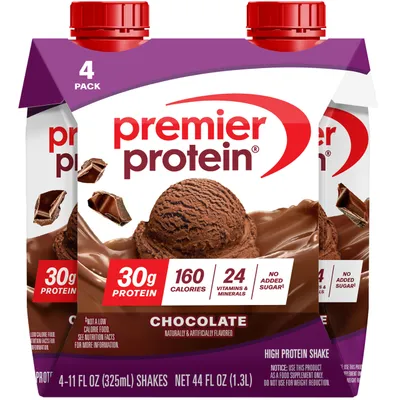
A ready-filled bottle is one convenience format when mixing and cleanup are the obstacle. Compare its exact label with your food plan.
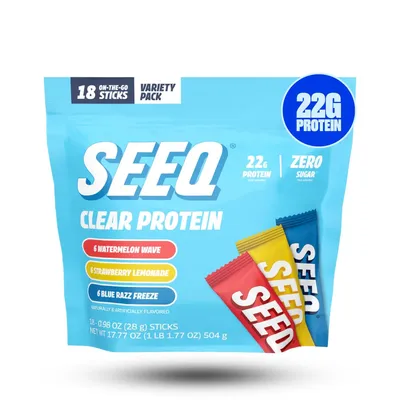
Packets offer a different preparation format. The sample pack contains multiple flavors; use the panel for the flavor you prepare.
Our protein-format guide explains how prepared drinks, powders, food and bars differ in day-to-day use. These formats address preparation and portability; the training and nutrition plan remains the central decision.
An example week to adapt with your plan
This worksheet shows how to make room for the different parts of a routine. Session content and nutrition quantities belong in the plan appropriate to you; the table leaves space for those decisions.
| When | Activity slot | Practical preparation |
|---|---|---|
| Monday | A strength session from your chosen program | Set out what you need and plan the day’s eating occasions. |
| Tuesday or Wednesday | Walking or another suitable aerobic activity | Choose a time and route you can repeat. |
| Thursday | A second strength-session slot | Record how the session went and any question for follow-up. |
| Weekend | Preferred activity, recovery and next-week planning | Check food supplies, diary commitments and practical barriers. |
Track a few useful things
Choose observations that relate to your life: completing your planned sessions, carrying the usual shopping, or how a familiar walk feels. Record the date and context rather than turning one difficult day into a diagnosis. A notebook can hold activity notes, manageable meals and questions together.
Useful appointment questions include: “How should we assess strength or function?”, “What food or protein target fits my current intake and health?”, and “Which change should prompt follow-up?” Bring the pattern you have noticed. See our practical starter-kit guide for organizing a routine around the things you already use.
Sources and method
- Joint advisory: nutritional priorities to support GLP-1 therapy for obesity, 2025.
- Look et al.: SURMOUNT-1 body-composition substudy, 2025; figure-unit correction (Figure 4’s y-axis label is corrected from percent to kilograms; the abstract percentages are unchanged) .
- CDC: adult physical activity guidance.
- Lundgren et al.: exercise, liraglutide and weight-loss maintenance, 2021. Primary abstract/indexed text was accessed; direct journal access was restricted.
Source evidence checked October 29, 2026. The examples and worksheet are original illustrations, not trial protocols.
Prepared by GLP Finds with AI-assisted writing and checked against the listed sources. Our editorial process. This article has not received independent clinical review.