Record what will help the next conversation
A useful appointment note connects an observation to a date and a question. You do not need a perfect daily diary. A few clear examples can explain what changed, what is difficult in your routine and what you want help deciding.
Choose a small set of observations relevant to the plan you already have. That might include an eating-pattern obstacle, a change in everyday function, or a question about the exact medicine’s instructions. Keep medicine changes with the prescriber rather than treating a diary prompt as a titration plan.
A completed fictional note
| Field | Example entry |
|---|---|
| Date/context | Thursday, before next week’s follow-up. |
| What changed | Work lunches have become irregular since my meeting schedule changed. |
| Practical obstacle | I often leave home without food and the office fridge is usually full. |
| What I tried | Packed one familiar shelf-stable snack and wrote down whether I used it. |
| Question for the visit | Can we review a realistic food plan for these workdays? |
| Next agreed action | Leave blank until the appointment. |
If a concern needs prompt care, a future appointment notebook is not a substitute for contacting the appropriate service.
Keep facts, questions and actions separate
Facts
Write the date, a short description and useful context. “I could not finish my usual lunch on Monday” is clearer than a week later writing “food was difficult.” If a care team requested a measurement, include its unit and how it was obtained.
Questions
Put the actual decision you need help with on a separate line. A list of observations without a question can consume appointment time while leaving the main concern unclear.
Agreed actions
After the visit, record the plan in the words and instructions given to you, including who to contact if something is unclear. Do not fill this section by guessing before the conversation.
Keep a current medicine/supplement list with exact product names and servings where relevant. A photograph of a label or the original packaging can resolve an ambiguous name more quickly than “the blue vitamin.”
Choose a paper format that matches your entries
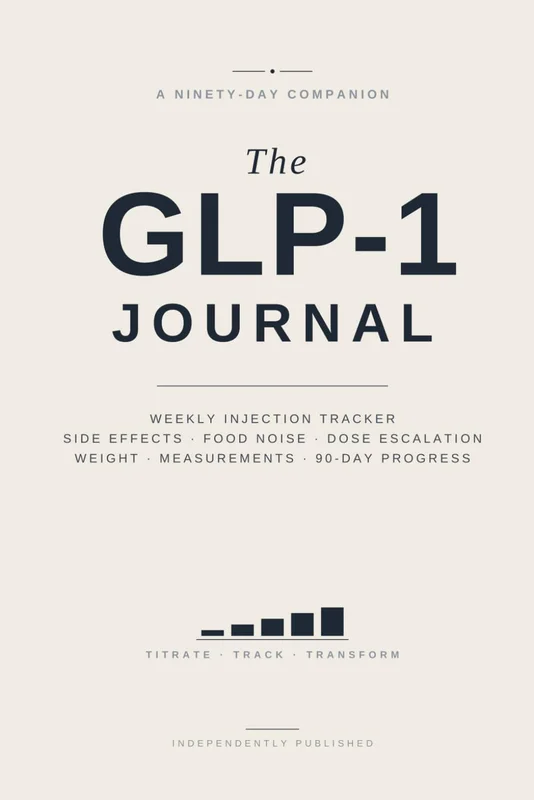
Seller describes appointment and medication logs, daily ratings and periodic check-ins.
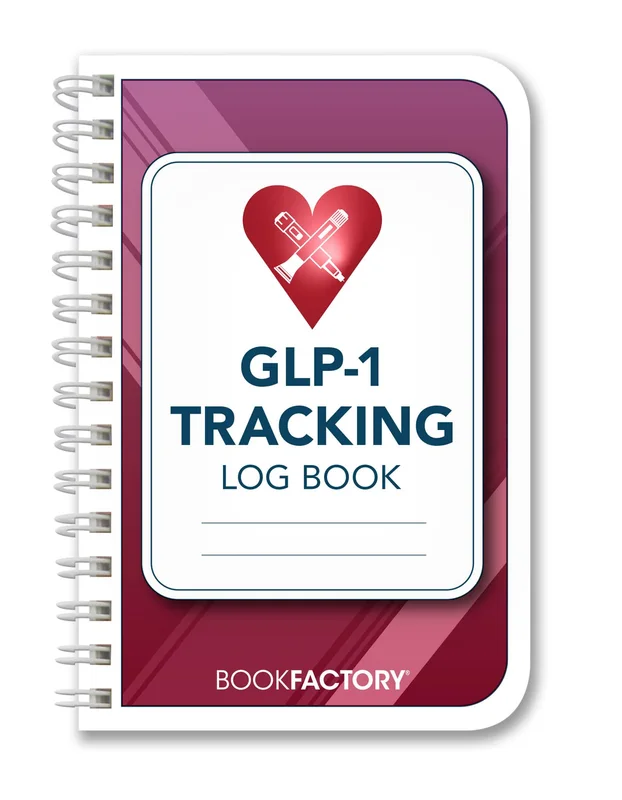
Small Wire-O format with photographed weekly grids and frontmatter.
The larger journal is listed as 150 pages and 6×9 in overall; BookFactory is 104 pages and 3.5×5.25 in. BookFactory’s actual weekly spread was available to inspect. The larger journal’s interior functions are seller-described, so we do not claim a tested amount of writing space.
A plain notebook is a flexible alternative. Draw four headings—date, observation, obstacle, question—and leave a little space for the agreed next step. The best format is one you can find before the appointment and use without catching up on weeks of abandoned prompts.
A five-minute appointment preparation
- Read the most recent entries and mark two or three questions.
- Add exact names of medicines, supplements or devices relevant to those questions.
- Keep one concrete dated example for each issue.
- Bring any instructions or labels that seem inconsistent.
- Leave room to record the actual plan after the visit.
Store the notebook privately. These are personal observations; GLP Finds does not collect them through this guide. The purpose is a clearer conversation, not a public record or a score of how well someone followed a routine.
Read next
Sources and method
- BookFactory exact product and retailer source — 104 pages, 3.5×5.25 in, Wire-O. Existing interior photos checked. The profile links the exact retailer listing; retailer exits may earn a commission.
- The GLP-1 Journal exact product and retailer source — 90-day title, 150 pages, 6×0.34×9 in. Interior functions are seller-described; no interior image was available. The profile links the exact retailer listing; retailer exits may earn a commission.
Sources checked October 29, 2026.
Prepared by GLP Finds with AI-assisted writing and checked against the listed sources. Our editorial process.