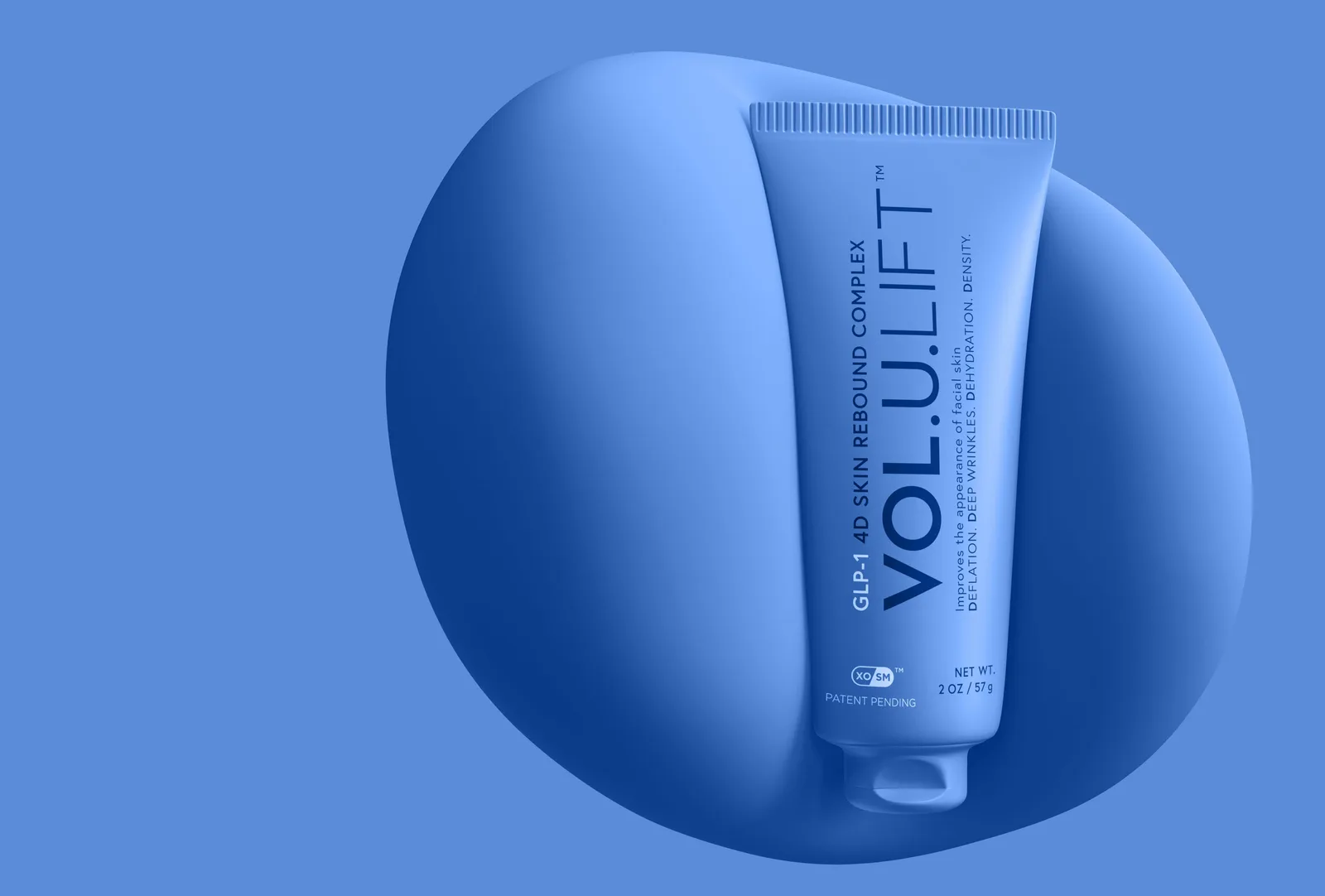
Your skincare priorities can change along with your weight. A familiar moisturizer may still feel lovely, while the things you notice in the mirror are different: a less defined jawline, more visible folds, or skin that looks less full.
That is the territory IMAGE Skincare is exploring with VOL.U.LIFT GLP-1 4D Skin Rebound Complex. Its pitch is unusually specific: bring several approaches to facial skin care together in one cream, with a study involving people who had experienced significant weight loss.
There is a lot packed into this little blue tube. Here is the useful part: how the formula is put together, what happened over 12 weeks, and how the photographs fit alongside the measurements.
The quick read
- The product: a topical face cream, applied to the face, neck and jawline. This article covers the original face formula, not VOL.U.LIFT BODY.
- The idea: combine ingredients aimed at hydration, visible lines, firmness and a fuller-looking appearance.
- The interesting evidence: the supplied clinical summary reports improvements across five measures after 12 weeks of twice-daily use.
- The decision: a targeted option for someone interested in those concerns and comfortable with a consistent routine.
What does “4D” mean?
The four Ds are the brand's way of organizing four visible concerns: deflation, deep wrinkles, dehydration and density. They describe the product's aims, rather than four separate diagnoses.
Think of the difference between skin that feels dry and skin that looks less full. Those concerns can overlap, but they are not interchangeable. A moisture-focused improvement can make skin look fresher; that alone does not tell us how much deeper tissue has changed. Keeping those questions separate makes the study much more interesting to read.
VOL.U.LIFT combines several ingredients rather than asking one fashionable ingredient to do everything. The supplied deck groups them by their intended roles:
- HA silanol: hyaluronic acid with silanetriol
Hydration and visible plumping
A moisture-focused part of the formula.
- Bakuchiol
Appearance of lines, texture and firmness
An ingredient to recognize when comparing smoothing formulas; it is not the same ingredient as retinol.
- Ornithine
A fuller-looking appearance
The deck discusses separate ingredient experiments. Those are not a measurement of how much facial fat this finished cream creates.
- Biomimetic collagen fragment
Appearance of firmness and sagging
A formulated collagen-related ingredient, not an injection of replacement collagen.
- Kangaroo paw extract
Appearance of firmness and wrinkles
A botanical ingredient, named for the Australian plant—not an animal ingredient.
- XOSM technology
Encapsulated ectoin, vitamin C and astaxanthin-rich microalgae
The brand's antioxidant-delivery concept.
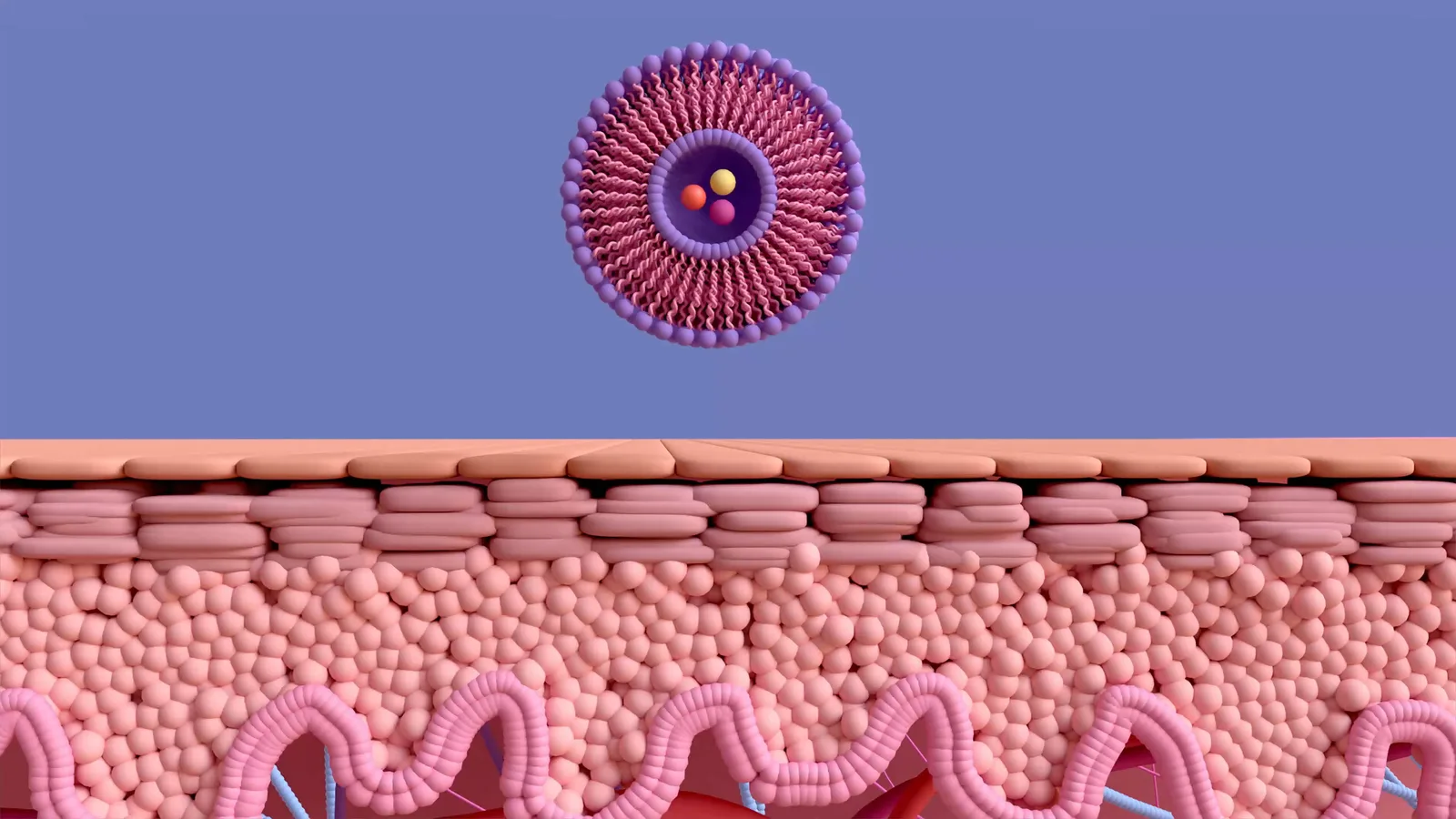
The ingredient story helps explain the design of the formula. It does not tell us which ingredient produced a particular result. The finished-product study tested the cream as a whole.
Twelve weeks, five headline results
The brand's supplied clinical summary reports the following changes after twice-daily application for 12 weeks in 29 participants aged 35–65 who had experienced significant weight loss. These are reported changes from the start of the study, not percentages of people who achieved a result.
| Measure | Reported change at 12 weeks |
|---|---|
| Skin and underlying tissue thickness, measured by ultrasound | +20.1% |
| Firmness measure | +22.5% |
| Net elasticity measure | +23.2% |
| Graded wrinkle appearance | −20.7% |
| Skin hydration measure | +21.8% |
The number to unpack is 20.1%. The deck calls this a volume increase. The later published paper describes an ultrasound measurement of cheek skin and subcutaneous thickness. That is a much more specific measurement than “your face becomes 20% fuller.”
Nor should the five percentages be added together. They come from different assessments, with different units and meanings. A hydration reading and a wrinkle grade answer different questions.
What the published study adds
The 2026 paper reports 33 enrolled participants and 29 completers in a 12-week open-label study funded by IMAGE Skincare. Participants used the cream twice daily and were also supplied sunscreen. There was no separate placebo or moisturizer-only comparison group. That makes the results encouraging observations, but it cannot establish how much improvement came specifically from this cream versus the rest of the routine or changes over time. Longer-term effects and prevention before weight loss were not established. Read the published study.
A closer look at the photographs
The supplied deck includes paired photographs at different visits. These two examples are useful because they show the areas the product is designed to address: cheek contours, folds around the mouth, and overall skin appearance.
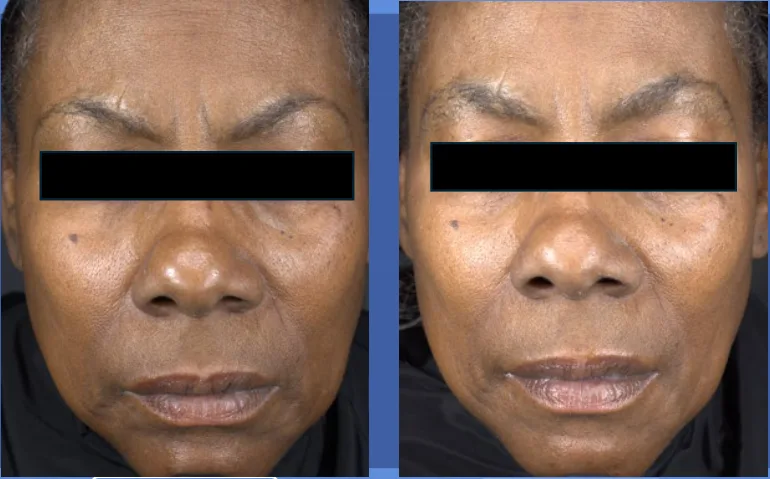
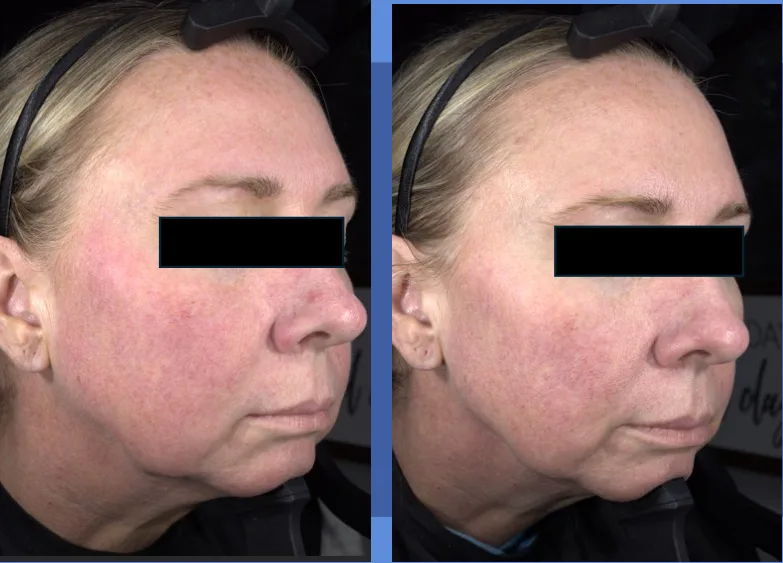
The visit labels matter: these are four- and eight-week examples, not twelve-week photographs. They show individual participants, not the group's average result. Facial position, expression and lighting can also influence how a comparison looks. The photographs are best read alongside the measurements rather than treated as a promise of a particular transformation.
How it fits into a routine
The routine is straightforward. IMAGE Skincare directs users to apply the face cream in the morning and evening to cleansed skin, including the face, neck and jawline. Its current product directions place it after a preferred serum and before daytime broad-spectrum sunscreen. If using retinol at night, the brand says to let that absorb before applying VOL.U.LIFT. Extra moisturizer can follow if needed. See the current product directions.
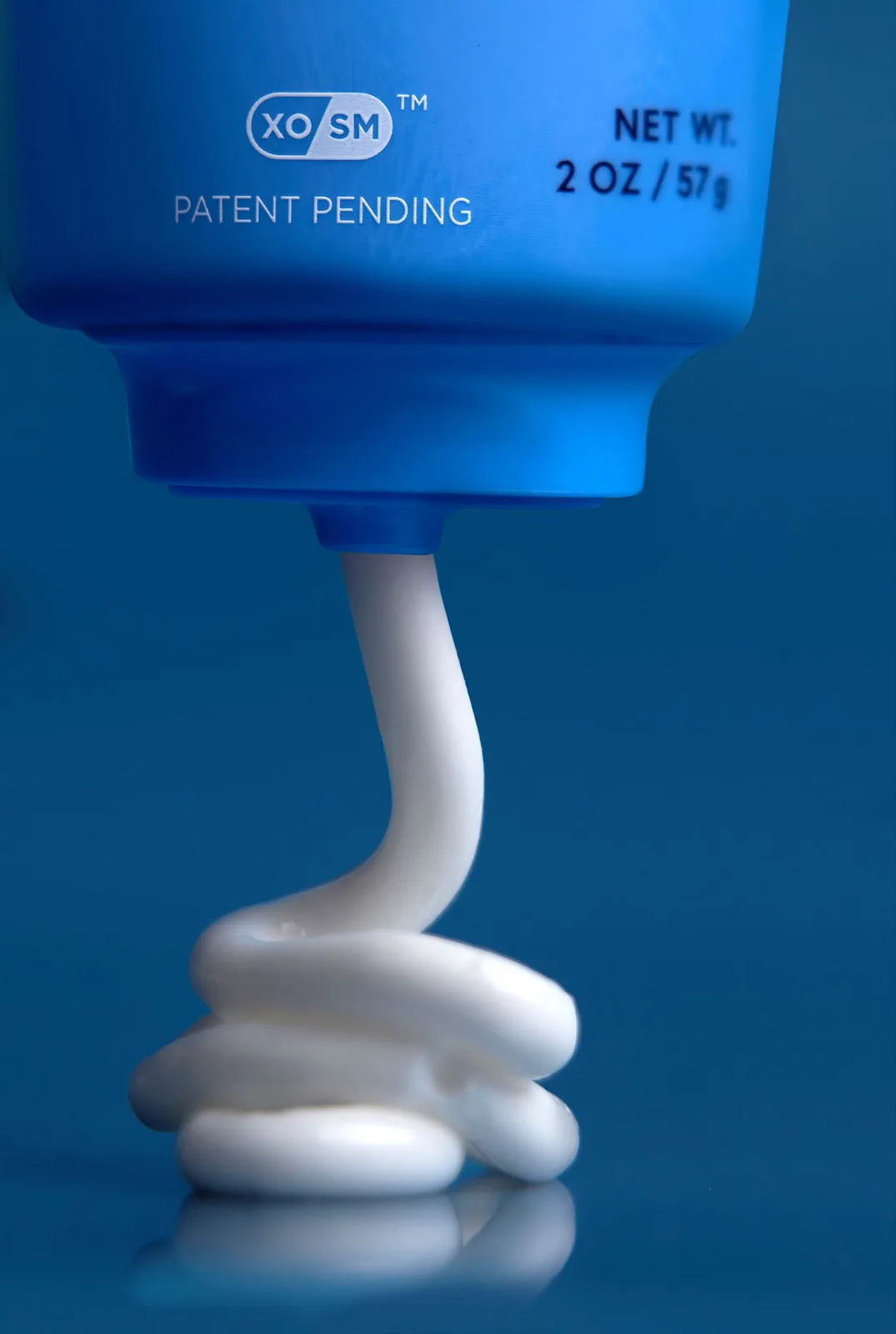
For a useful personal comparison, keep a simple record: what you use, how your skin feels, and photographs taken in similar light and at a similar angle. Focus on the concerns that matter to you—comfort, visible texture or firmness—rather than trying to reproduce a percentage from an instrument-based study at home.
Is it a good fit for your shelf?
VOL.U.LIFT is most interesting if you want one product built around several visible changes after weight loss and you are willing to use it consistently. Its appeal is the combination of a defined formula, a specific use case and an actual finished-product study.
If your main concern is simply dry skin, compare it with your existing moisturizer on comfort, ingredients, routine and cost. If your goal is a substantial change in facial contours, the study does not establish that this topical cream can deliver the same outcome as a cosmetic procedure. The trial also does not tell us that everyone taking a GLP medicine needs this product.
The useful takeaway is concrete: this is a cream with a thoughtful ingredient mix and promising short-term measurements in a relevant group of people. The next question is whether that combination matches the change you want to see—and the routine you want to keep.
Explore skin care
Sources and image credits
- IMAGE Skincare, VOL.U.LIFT education deck supplied for this article: formulation overview, ingredient background, 12-week clinical summary and selected photographs. Images reproduced with permission.
- Nguyen and colleagues, Journal of Cosmetic Dermatology (2026), published finished-product study.
- IMAGE Skincare, current face-product information and directions.